News stories have been swirling in recent days regarding the winner of the most recent Kentucky Derby, Medina Spirit. Following the race, Medina Spirit failed an initial drug test with his blood testing positive for betamethasone, an anti-inflammatory drug. The horse’s trainer has since acknowledged that the horse was treated with an anti-fungal ointment which contains betamethasone. A second blood test, called a “split sample” will be done. The results will take several weeks, but if the second test comes back positive, Medina Spirit will be disqualified as the winner of the 2021 Kentucky Derby. However, the horse has been cleared to run in the upcoming Preakness, and rigorous testing will be conducted on the horse on race day.
The history of horse doping in various forms goes back centuries. As far back as Roman times, the use of hydromel (a beverage similar to mead) had such an effect on chariot racing that it became an offense punishable by death. Scattered reports exist from the 16th and 17th centuries regarding the usage of stimulants, possibly arsenic, and the prohibition of “exciting substances and methods” in horse racing in England.
A law was passed in the UK in 1903 which prohibited horse doping, and by 1912, tests existed which tested a horse’s saliva for various substances such as caffeine, cocaine, or morphine. A positive test result meant an immediate disqualification from the race. However, horse doping really took off in the United States when the modern-day system of betting was legalized in 1933. Back then, estimates are that up to 50% of horses were doped, which had the additional effect of increasing injuries. The most frequent culprits were cocaine, heroin, caffeine, and strychnine. Later in the century, anti-doping efforts were increased and standardized by the Fédération Equestre Internationale, or FEI.
Nowadays, about 1100 substances are classified by the Association of Racing Commissioners International (ARCI) as performance-enhancers. These fall under the categories of stimulants, tranquilizers, bronchodilators, and behavioral modifiers.
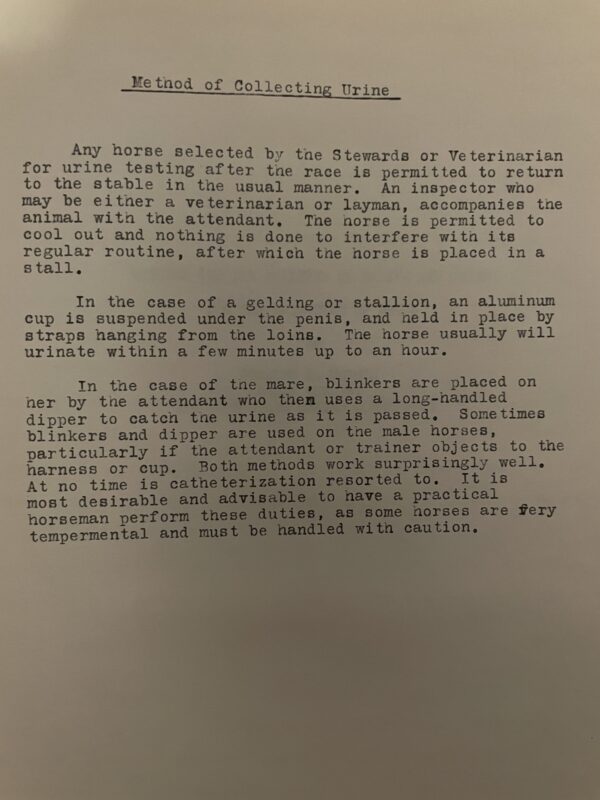
Here at Bernett Penka, we currently have in our inventory a fascinating and early scientific report on testing horses for performance-enhancing drugs via saliva and urine tests.
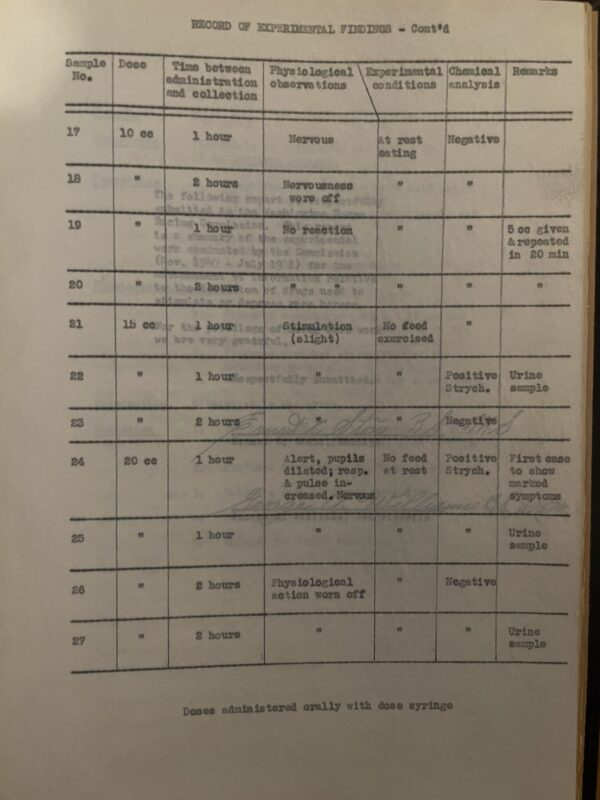
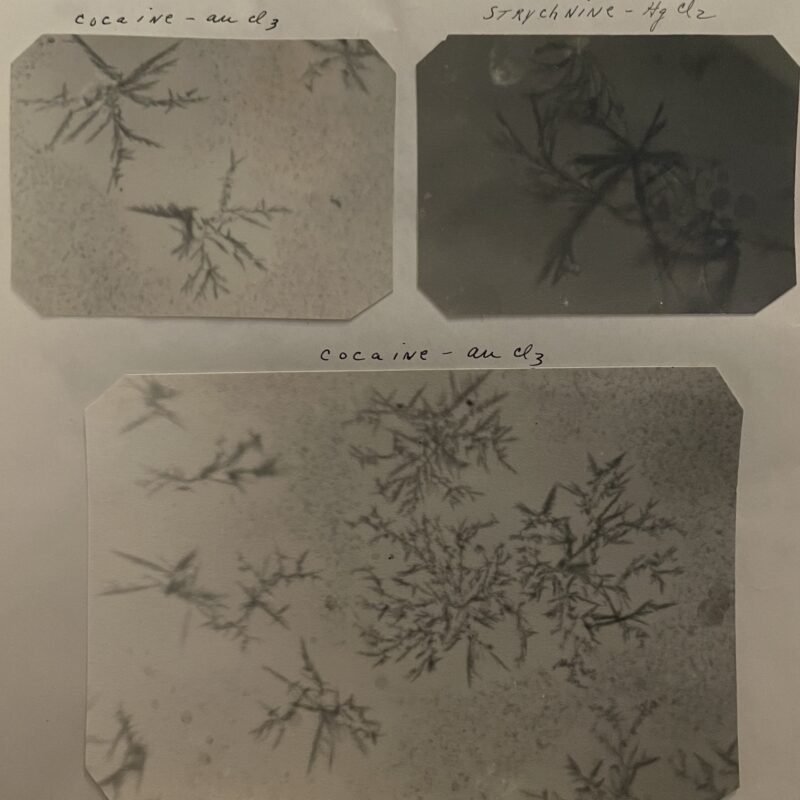
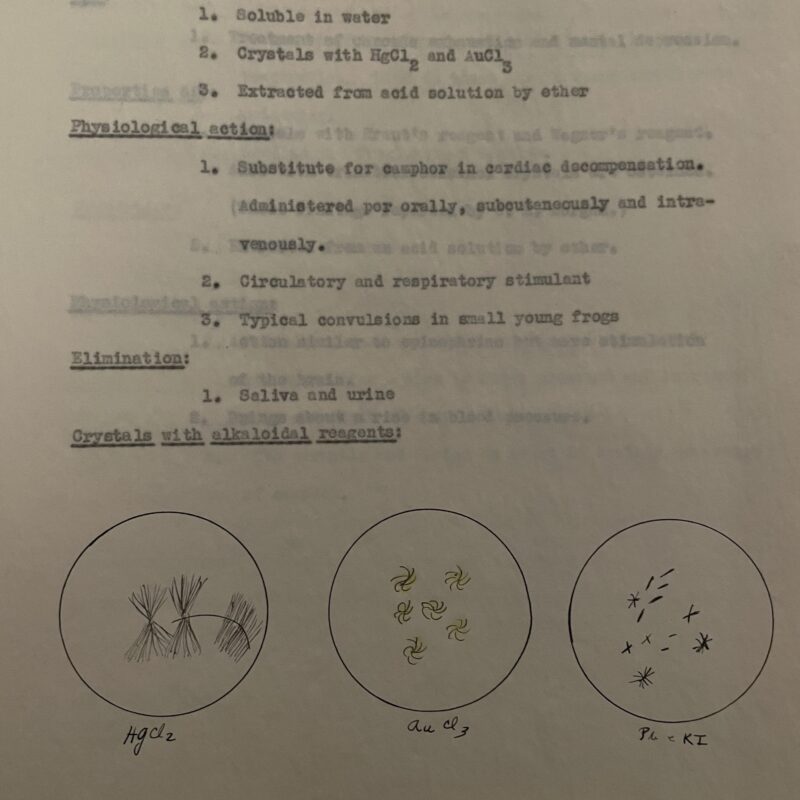
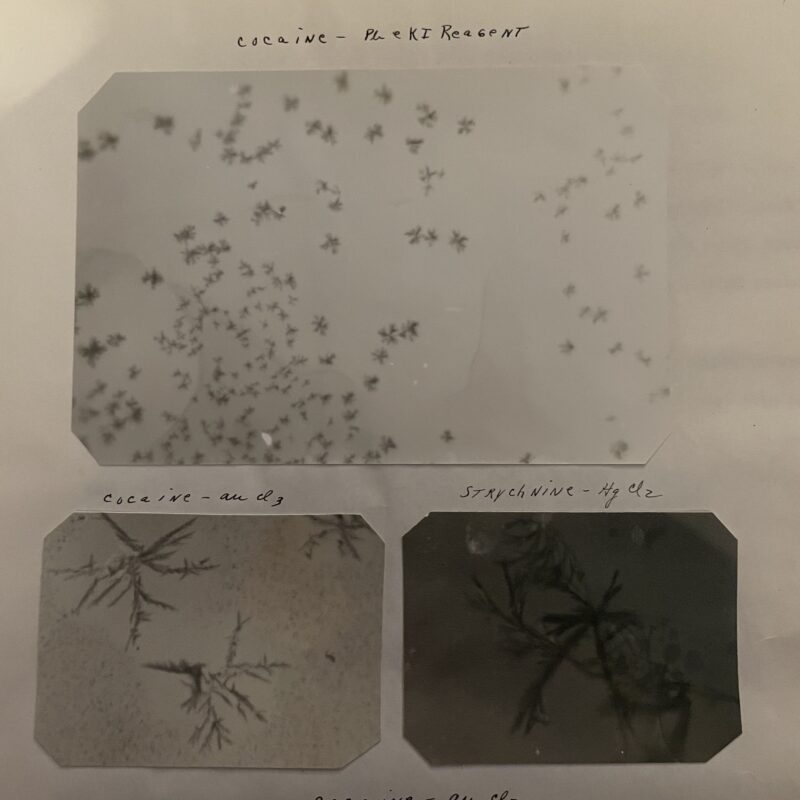
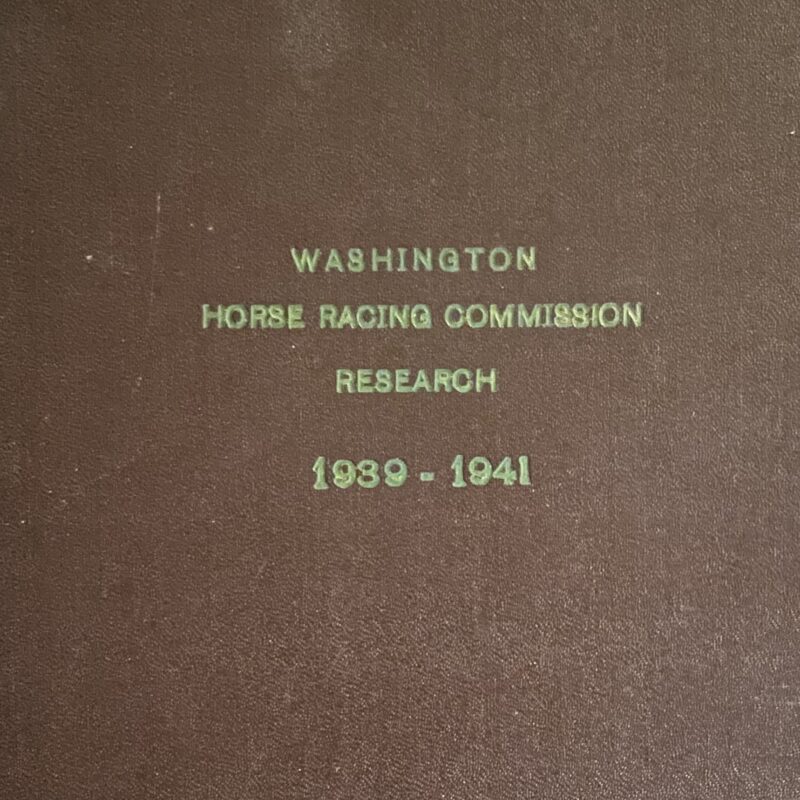
(Drugs & Photography) – Williams, George A. & Ernest C. Stone. Washington Horse Racing Commission Research. Unpaginated (54 typed leaves printed recto only) original typed research report by Williams, a veterinarian, and Stone, a chemist, documenting their attempts to effectively perform saliva and urine tests on thoroughbred racing horses to detect the existence of performance-enhancing drugs and stimulants, including information on the collection of fluids, a chemical analysis of synthetic drugs, and the effect of the drugs when administered to horses in varying amounts, illustrated with ten original photographs of various substances at a microscopic level and one page with several small original chemical illustrations. Overall very fine condition. 4to. Original cloth-covered boards, title impressed in green ink. Some very slight rubbing, especially to corners and edges of spine. N.p. (Olympia, Washington) (Washington Horse Racing Commission) n.d. (1941). (50336)
The beginning of the report lays out the method used by Williams and Stone to photograph alkaloid-double-salt crystals, which they appear to have developed themselves via a series of experiments. They settled upon a method using “triple S panchromatic film and exposing for a period of from five to ten seconds (depending on the crystals photographed and the amount of light available)” which produced “satisfactory photomicrographs”. They follow this with the exact solutions they used to develop the film as well as to fix the photomicrographs. Their pioneering work appears similar to the methods used beginning in the 1970’s during Reagan’s “War on Drugs” and later to test for performance-enhancing drugs in humans. A possibly unique and highly technical work.
{ 1 comment }
