Games and toys have been created for children to play with for as long as humans have been in existence, and children’s books date back to some of the earliest experiments in printing. The first picture book exclusively meant for children is generally accepted to be Orbis Sensualium Pictus [The Visible World in Pictures], published in 1658 by Johann Amos Comenius. In it, Comenius combined text with illustrations to help teach children about the world.
This collection of items from Bernett Rare Books offers something for everyone. We present books, educational materials, and games aimed at children, as well as a trade catalog of toy manufacture, dating from as early as 1814, up through the 1960s, and from locations across Europe and Asia.
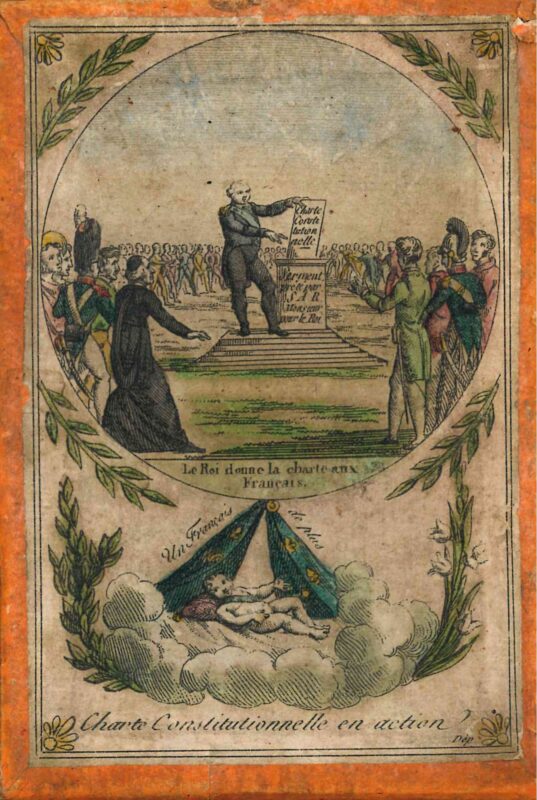
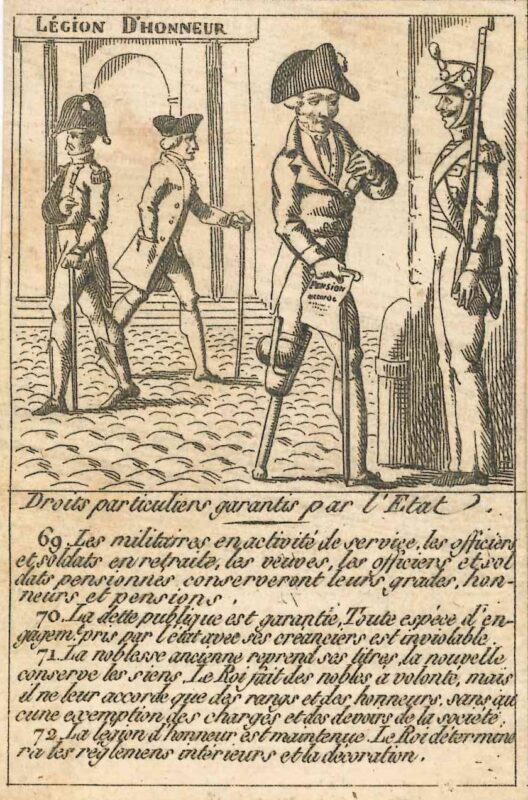 The earliest item in this grouping is a rare set of French historical cards, dedicated to teaching about the Constitutional Charter. The set of 24 cards date from 1814, each with an engraved illustration above several lines of text detailing 2 to 4 of the articles from the Charter, with all 76 articles contained across the 24 cards. This type of series was distributed by the “Marchands de Nouveautés”, a generic name given to a group of print dealers in Paris who usually printed more popular stories such as Robinson Crusoe or Don Quixote. A set of cards such as this one was intended to help eliminate Napoleonic fervor and unite France under a renewed sympathy for and belief in the monarchy. A very scarce set in its original cardboard box with engraved and hand-colored vignette to lid.
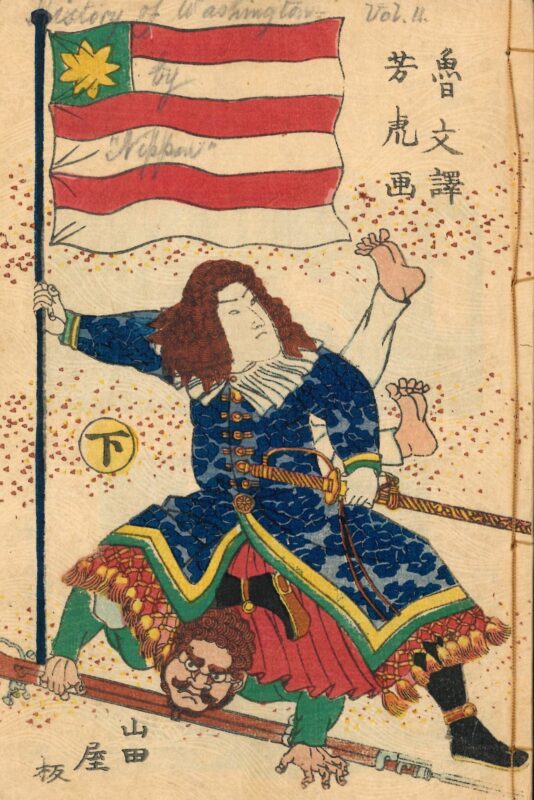
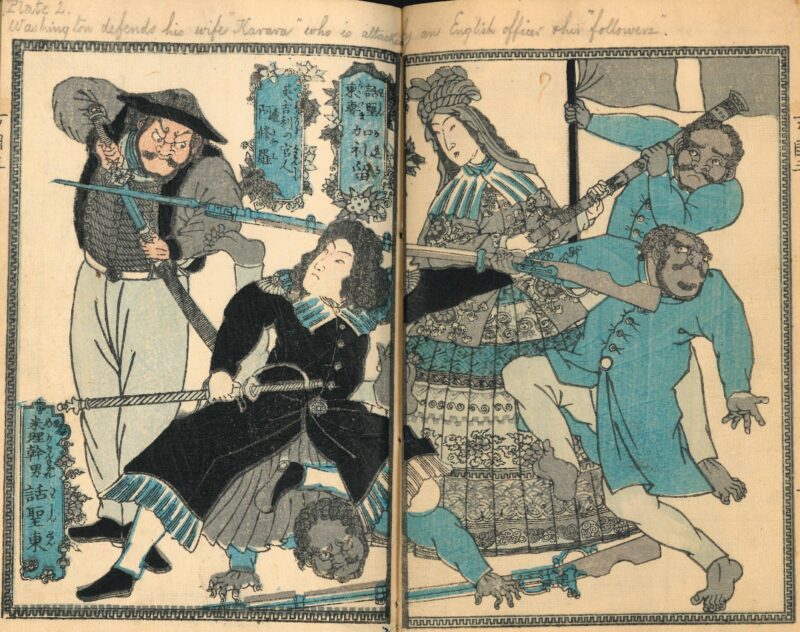 The second item is a whimsical and bizarre illustrated alternative American history from Japan called Osanaetoki Bankokubanashi. Dating to 1861, this unusual and rare set of four booklets translate loosely as “The History of Washington”. Written by Kanagaki Robun and illustrated by Utagawa Yoshitora, this fascinating series describes and depicts scenes where Christopher Columbus discovers America and defeats mutineers, but then shows George Washington, John Adams, and Benjamin Franklin as superhero-like figures who punch tigers, defeat dragons, and kill giant snakes who eat people. This set was issued shortly after Commodore Perry’s arrival in Japan, when interest in America was high but direct experience with America was still virtually non-existent – and so Japanese writers could imagine up fantastical tales and visions of grotesque monsters, evil villains, and peaceful goddesses existing in that exotic land.
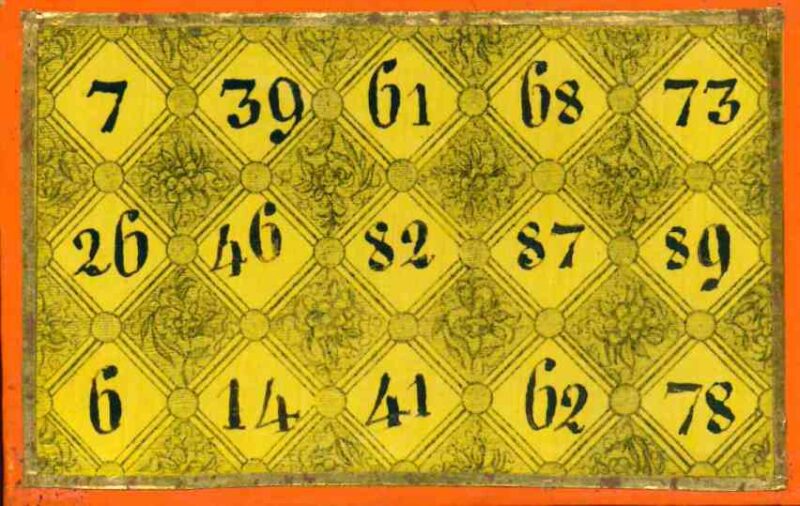 The third object which also dates most likely to the 19th century is an antique ‘tombola’ game from Italy. ‘Tombola’ is a traditional Italian game very similar to bingo, first played in Naples in the 18th century. This set is comprised of a cardboard game board with 90 gold-numbered spaces on red paper in an embossed gold paper frame, 90 hand-numbered wooden game tokens, and 87 total individual cards in 15 sets, the cards also hand-numbered. Traditionally, players would cover the numbers on their individual cards using beans, lentils, or pieces of citrus peel as markers.
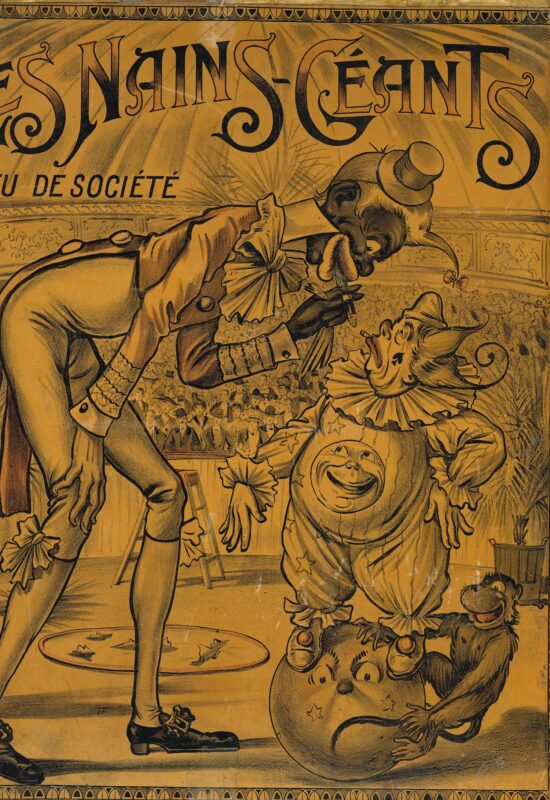
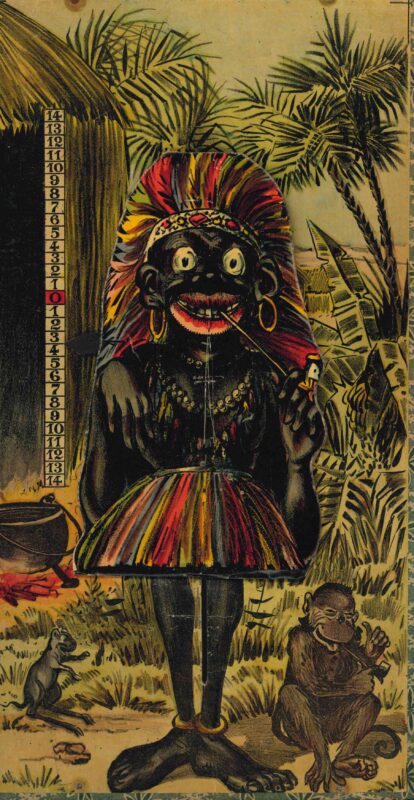
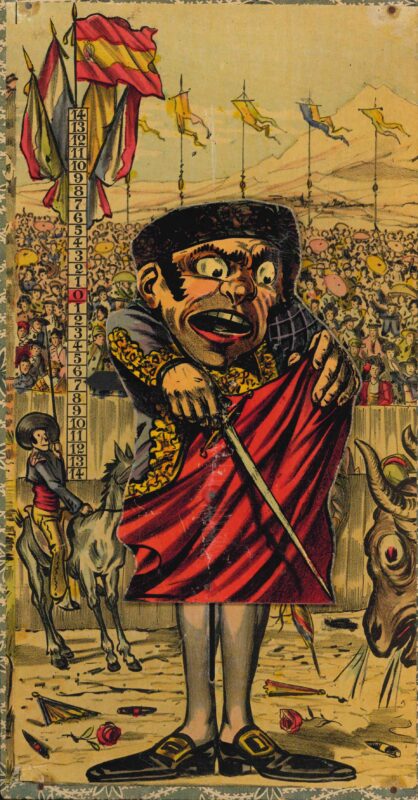 Our fourth object is a larger-format board game dating to right around the turn-of-the-century. Titled ‘Les Nains-Géants’, or ‘The Dwarf Giants’, this humorous game has players keep track of their points using a large chromolithographed caricature-style figure which slide up and down along a scoring track, making the figures ‘grow’ and ‘shrink’. Whoever reaches the top of their tracker first wins the game. The characters in the game include a jockey, a postman, a matador, a farmer, a soldier, and a “tribal” style Black man in front of a hut. The box lid also includes a racial stereotype in its cover illustration depiction of a Black man and a circus clown. The game was published by Saussine, a well-known Parisian game manufacturer, and was designed by Eugene Serre, one of Saussine’s greatest illustrators.
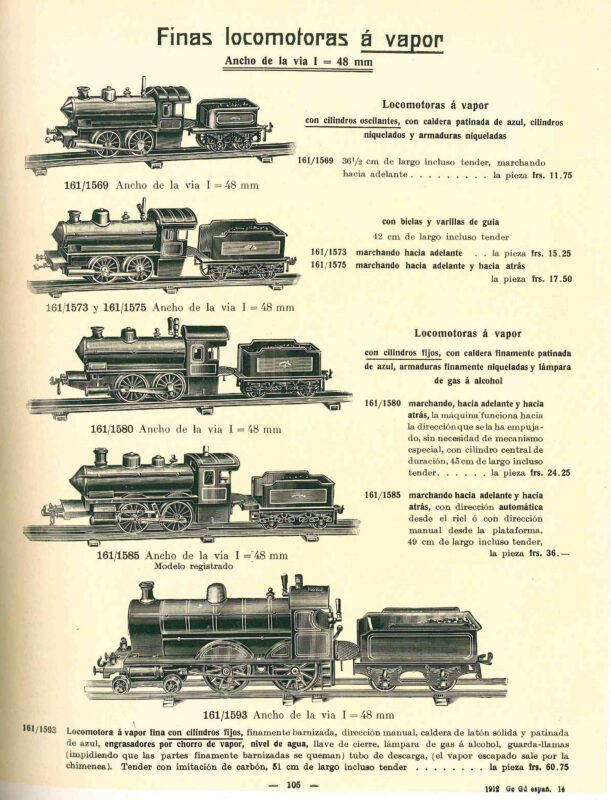
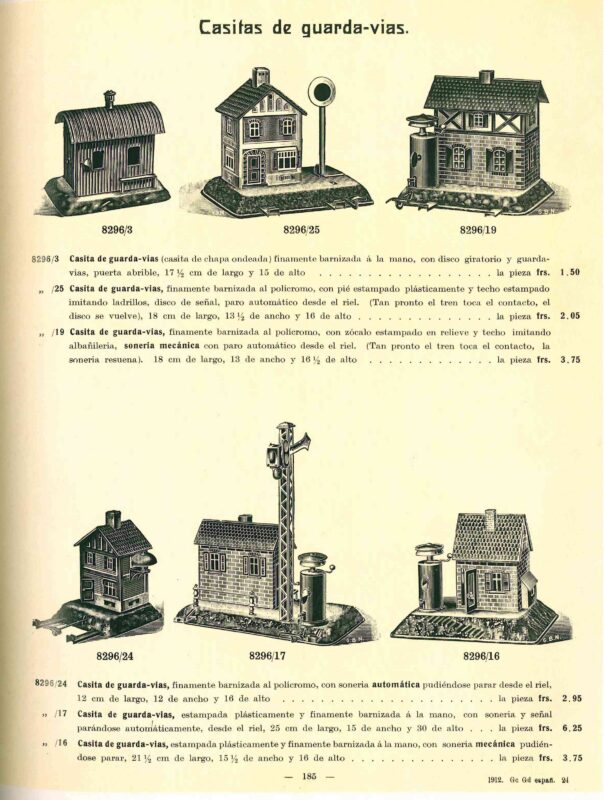 Moving into the 20th century, we have this scarce trade catalog of German toys for the Spanish market. The catalog was printed in Nuremberg in 1912 for Gebrüder Bing, a German toy company founded in 1863 which started their business producing metal tableware and utensils before moving to toy production. They ended up becoming best-known for their toy trains and live steam engines. This particular catalog covers a wide range of their offerings and provides detailed descriptions, measurements, and prices of toys such as steam engines, steam trains, ships, automobiles, train tracks, train set accessories, magic lanterns, and steroscopes.
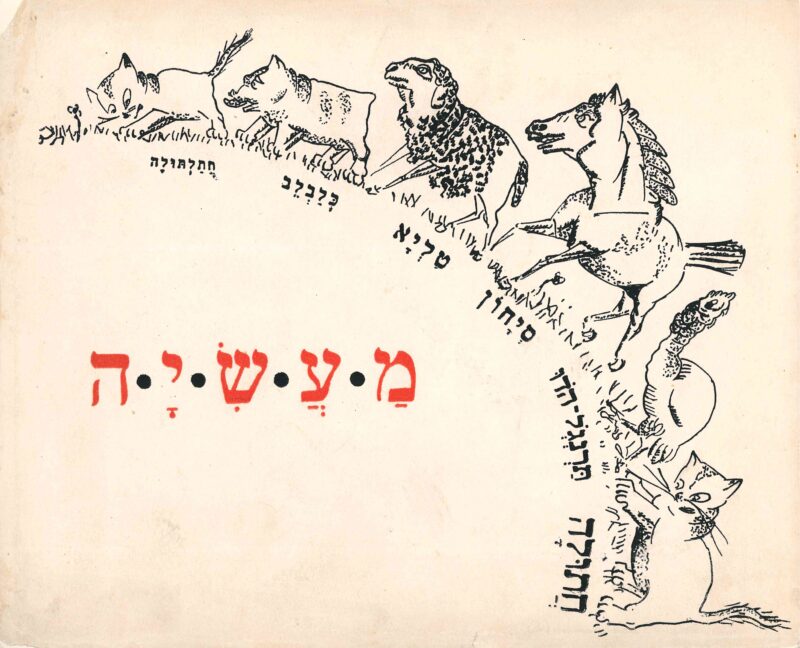
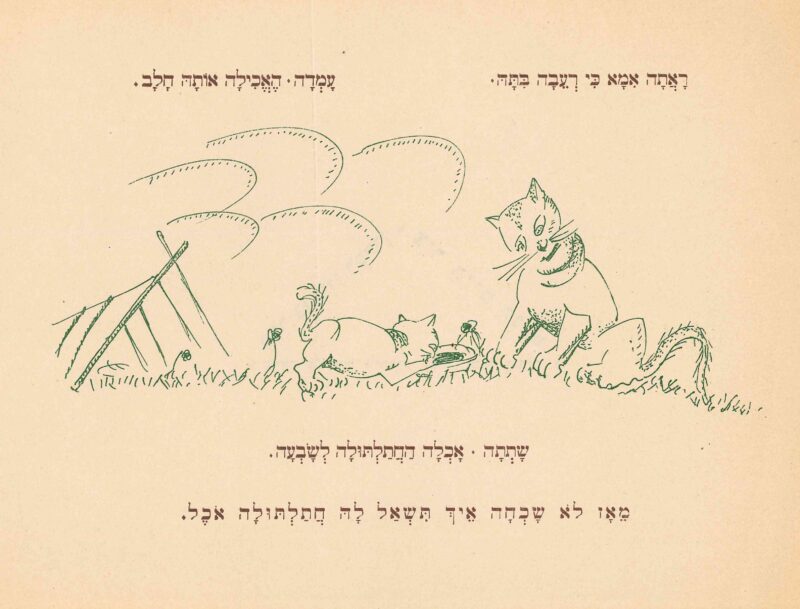 Next up are a few various items dating to the 1920s. The first of these is a rare Hebrew-language children’s book published in Warsaw around 1922. The book was written by Bentsiyon Raskin (also known as Ben Zion Raskin), one of the leaders of the Zionist movement in Warsaw, and illustrated by Chaim Hanft, a member of the Warsaw School of Fine Arts. The book tells the story of a kitten who played with other animals until she grew hungry, and realized she had forgotten how to ask for food. It was published as part of Raskin’s “Zil Zlil” series of five children’s books.
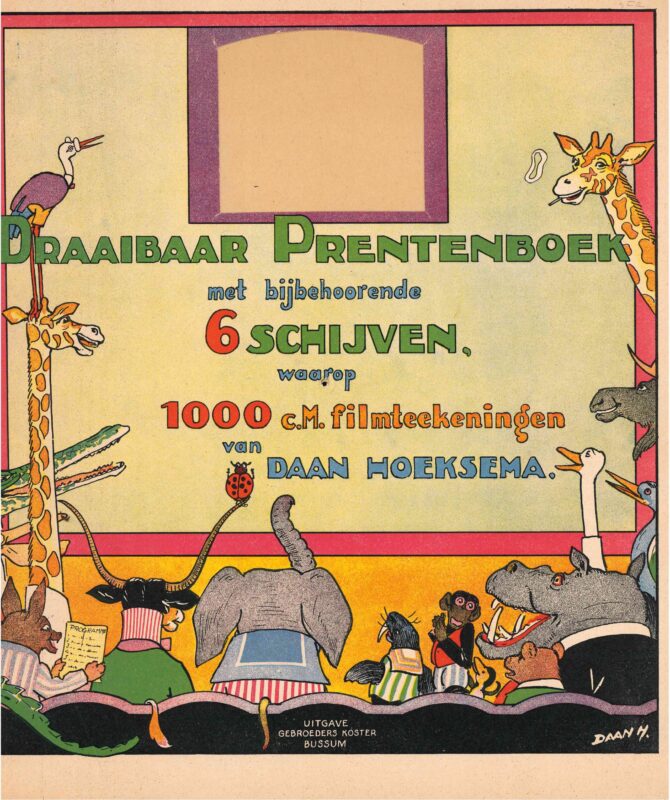
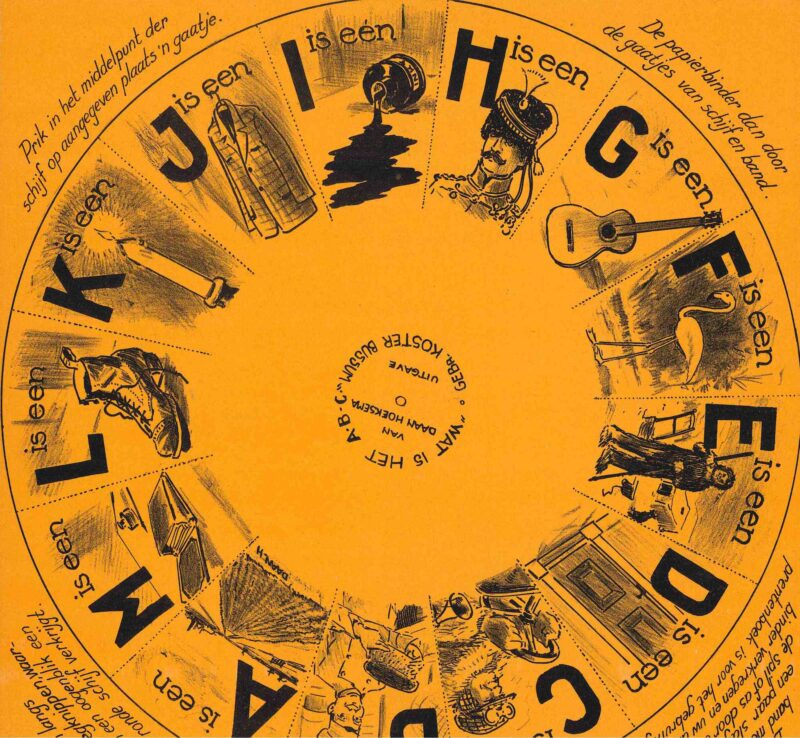 The next object is a Dutch moveable children’s picture book, a sort of precursor to early animation, dating to 1924. It was designed by Daan Hoeksema, a noted Dutch children’s book illustrator and graphic designer who wrote what is considered by many to be the first locally-produced Dutch comic book with an ongoing storyline and recurring main character. This rare ‘book’, titled ‘Draaibaar Prentenboek met bijbehoorende 6 schijven, wwarop 100 c.m. filmteekeningen’, consists of six sheets of cardstock with illustrations drawn around a circle. The sheets contain instructions for cutting out the discs and securing them through the center with a brad, allowing the viewer to rotate the disc and see a sequential story or series of images, a sort of moving comic book. The discs contain images and stories including an alphabet, the adventures of two traditional Dutch villagers, racist stereotypes of Black people in Africa, moral tales, and silhouettes of circus performers, among others.
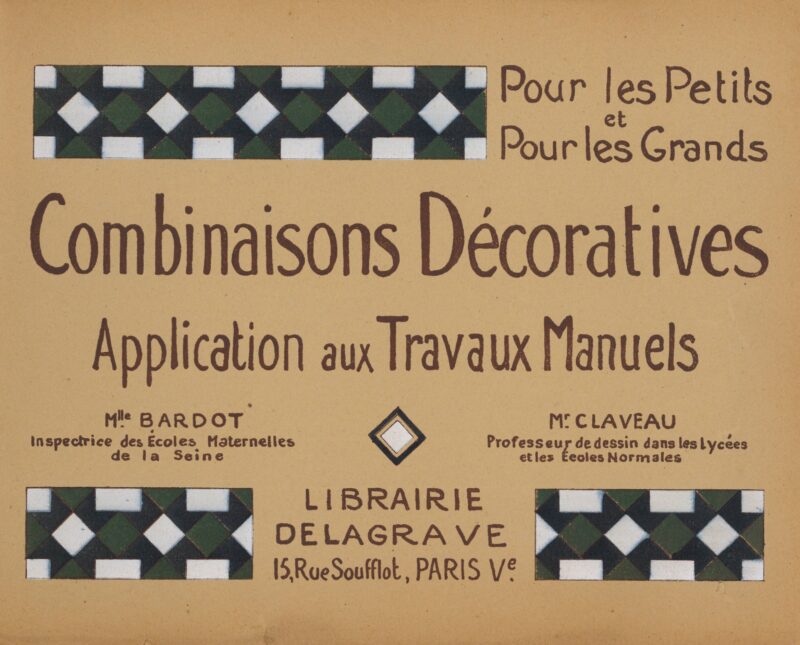
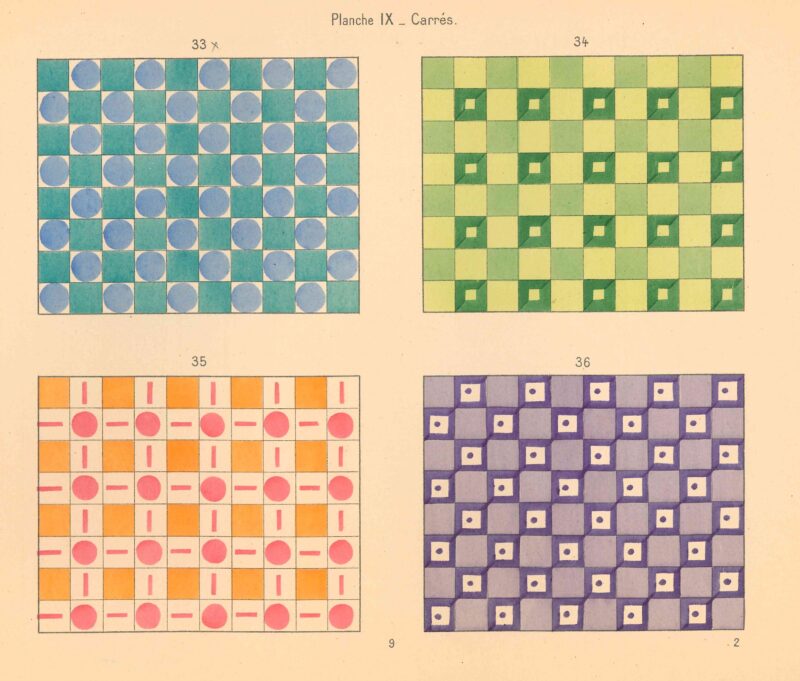 The last item dating to the 1920s is a French early childhood art education manual with 16 original brightly colored pochoir plates. Combinaison Décoratives: Application aux Travaux Manuels, Pour les Petits et Pour les Grands was published in Paris in 1929 as a method for teaching color composition to children. The plates show numerous decorative patterns which were executed by young schoolchildren between the ages of 4 and 8. One of the authors, Madeleine Bardot, served as Inspectrice des Écoles Maternelles de la Seine and was an advocate of “l’education nouvelle”, a movement which, in their words, “prepared children not only to become future citizens capable of fulfilling their duties towards their loved ones and humanity as a whole, but also human beings conscious of their human dignity.” The other author, M. Claveau, was a professor of drawing at the lycées and écoles normales. Together the two selected 64 pieces from the best examples of student work. Many of the outlines were prepared by teachers and filled in by students, but the last few plates were created entirely by children from start to finish. A beautiful work of early childhood education and also color theory.
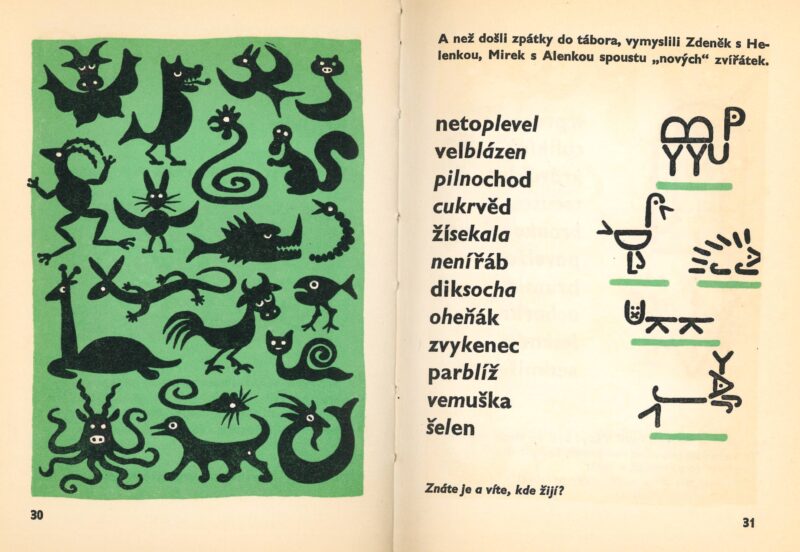
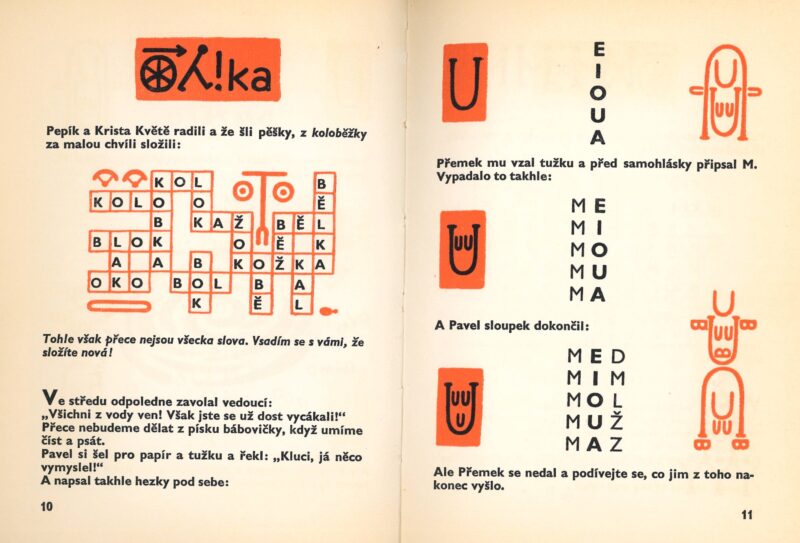 The final item in this collection is a quirky work of Czech concrete poetry designed as a whimsical children’s book. Co se slovy všechno poví was published in 1964 and contains poems by Josef Hirsal and Bohumila Grögerová, foremost representatives of concrete and experimental poetry in mid-century Czechoslovakia. With illustrations by Věra and Pavel Brázda, the book is a playful exploration of word-based games that children play on a train ride, full of visual poems, full-page colorful illustrations, and two-color letterpress designs set by Josef Dolezal.
We welcome inquiries on any of the above items, and wish you all a very happy and healthy holiday season!
{ 1 comment }