The Spanish Civil War was a period of great political turmoil and upheaval in Spain. The war broke out on July 17, 1936, when a conservative military group led by the generals Emilio Mola and Francisco Franco tried to overthrow the country’s democratically-elected republican government. Political and social tensions had been building in Spain for years prior to the actual revolt.
The military rebels expected an easy win and were surprised to encounter a huge popular resistance, especially in more densely populated areas. In a very short time, Spain was split in half, with one zone controlled by the government, or the Republicans, and the other by rebels, known as the Nationalists. Three years of bloodshed and fighting followed. General Franco quickly emerged as the commander of the Nationalist side, facing the Republican leaders of President Azaña, Prime Minister Largo Caballero, and Prime Minister Negrín. The war eventually ended with a Nationalist victory on April 1, 1939, with an estimate 500,000 and Franco would rule Spain as dictator until his death in 1975.
Not surprisingly, numerous books, pamphlets, and periodicals were published during the war, covering both sides of the conflict in real time, as well as international observations on the war and statements of solidarity and sympathy with one side or the other. Here at Bernett Rare Books, we currently have a collection of Spanish Civil War publications which reflect both the Republican and Nationalist sides of the struggle, as well as international sympathies with and coverage of the war. The following three titles were all published in Spain during the war:
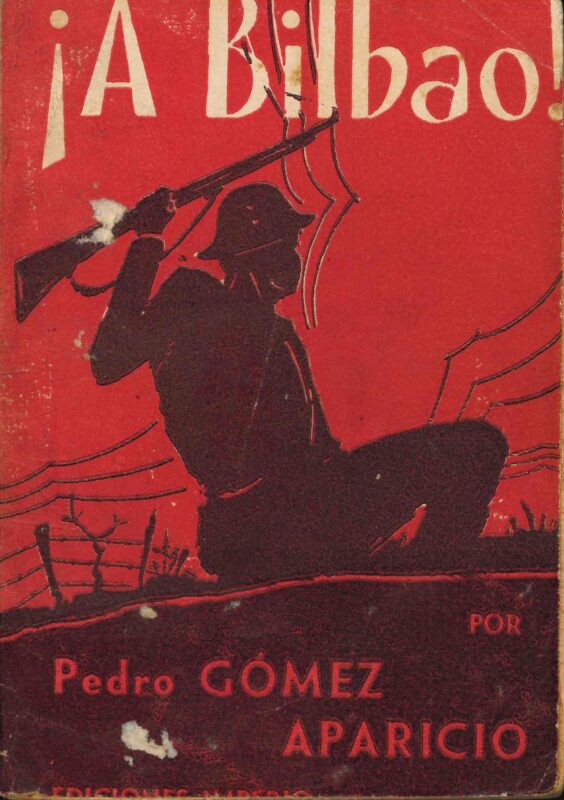 Gómez Aparicio, Pedro. ¡A Bilbao! Estampas de la Guerra en Vizcaya. Granada: Librería Prieto (Ediciones Imperio), 1937. Octavo (17.5 x 12.2 cm). Original color printed wrappers; 354 pp., illustrated. Some light wear and soiling to covers, mild browning to pages, overall very good. (52999) $1,750
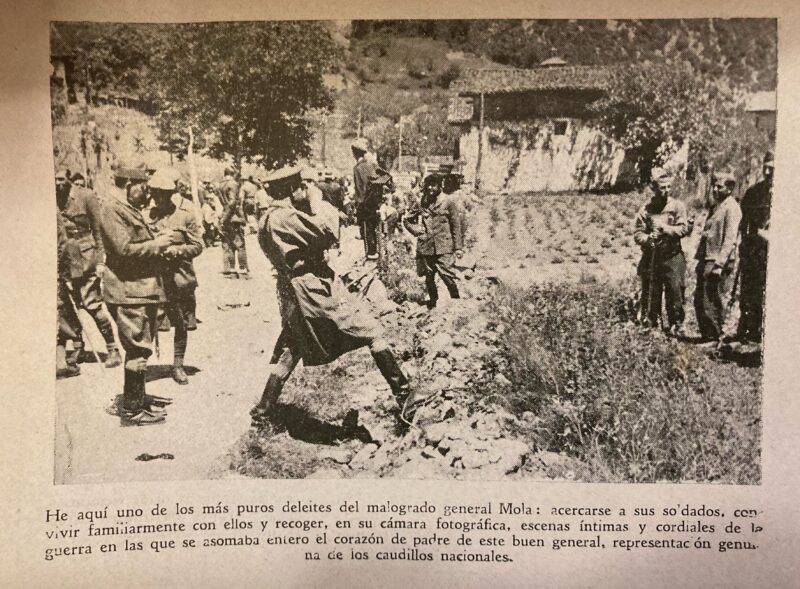
The first edition of the work by the Spanish journalist Pedro Gómez Aparicio (1903-1983). Born in Madrid, Aparicio served as the President of the Asociación de la Prensa de Madrid, served as deputy director of the Agencia EFE, and was awarded several prizes and medals for his work. He served as editor-in-chief of the newspaper El Debate, of the magazine Mundo, and was the founder and first director of the Granada-based newspaper El Ideal. He also worked as a professor of journalism and was awarded a Medalla al Mérito en el Trabajo personally by Franco. During the first two decades of Francoism, Aparicio was given his own radio commentary show on Radio Nacional de España, which was broadcast together with the news report. He was popularly known as “Pedrogo”. Prior to these years, during the Second Republic, he was an outspoken critic of the regime, which caused him to come up against issues of censorship. When the war broke out, he moved to Burgos and served as a war correspondent for the rebel troops.
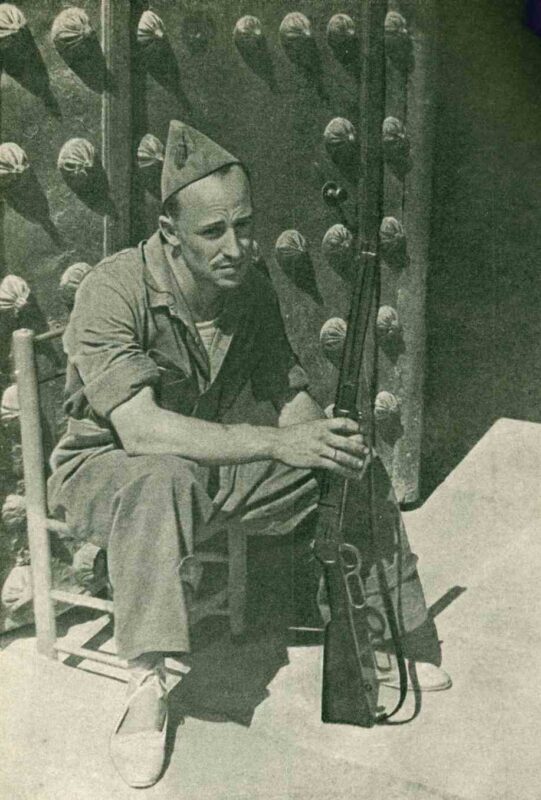
This volume is dedicated to General Franco and all of those who fight, and sets out to cover the campaign in the north of Spain. It is divided into sixteen chapters laid out in a table of contents at the back. There are scattered laid-in illustrations from photographs of soldiers and civilians, and one fold-out map with tissue paper overlay showing the March 30th offensive.
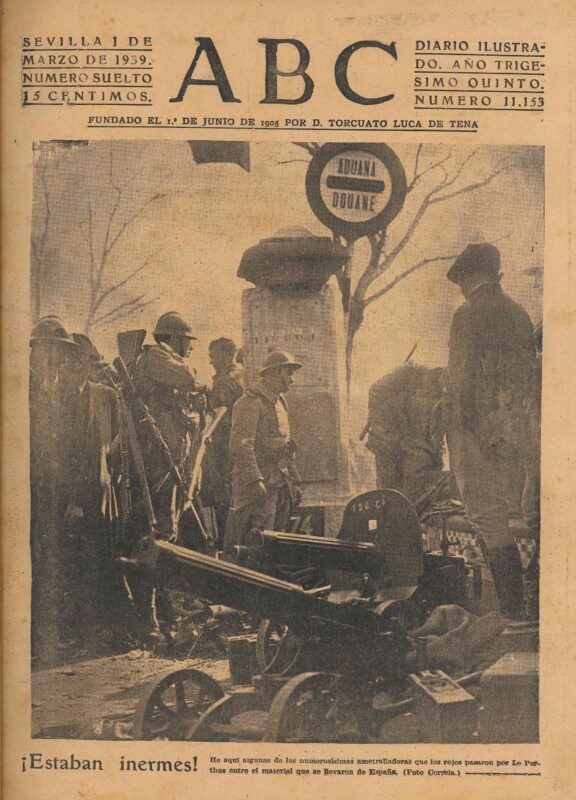
ABC. Diario Ilustrado. Edición de Andalucia. No. 10340 (18 Julio 1936) through No. 11181 (2 Abril 1939). Approximately 841 issues total bound in 32 volumes of the Seville edition of the long-running conservative Catholic and monarchist Spanish journal, covering the period of the Spanish Civil War, being the majority of years XXXII through XXXV of the journal’s publication, with 5 volumes for 1936, 12 each for 1937 and 1938, and 3 for 1939. Quarto (12 1/2 x 9 1/4 inches). Cloth-backed boards with gilt-stamped title, month, and year to spine. Light rubbing and abrasions to covers, some light scattered toning and foxing to interior, overall very good. Sevilla, 1936-1939. (53365) $15,000
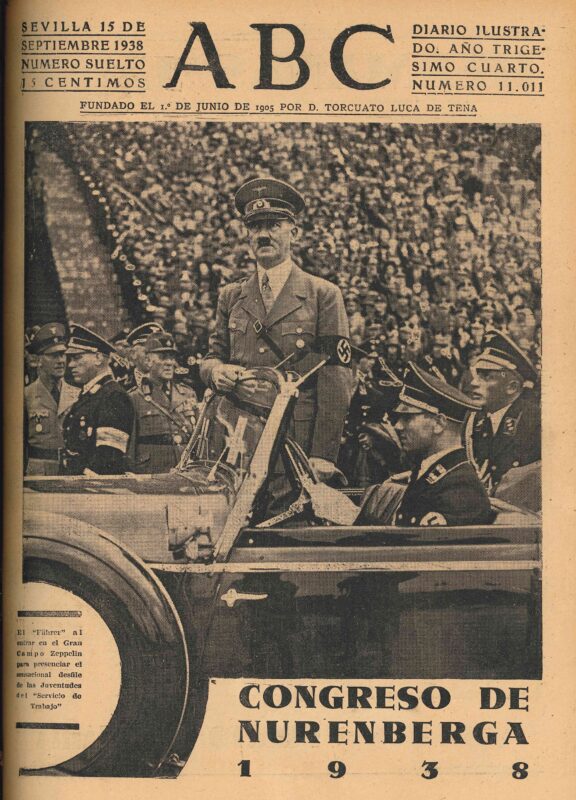 ABC was founded in Madrid in January 1903 by Torcuato Luca de Tena y Álvarez-Ossorio and published by Prensa Española, and in October of 1929 the Seville edition began publication. Over the years, 11 different editions have existed, although Madrid and Seville are the primary two.
Shortly after the outbreak of the Spanish Civl War, ABC Madrid was seized by the republican government, and the newspaper changed its politics to support the Republicans. ABC Sevilla, on the other hand, was supportive of the Nationalists. After the war ended, ABC Madrid was given back to its original owners by Franco, under whom ABC became the best-selling newspaper in Spain. As late as 2005, it was still the third-best-selling newspaper in Spain, and the oldest in Madrid. Publication continues to this day. Many of the issues have bold photographic or illustrated covers, some with photocollage, while many of the later issues have very few or no illustrations. An important publication providing a Nationalist perspective from the critical years of the Spanish Civil War. Scarce institutionally.
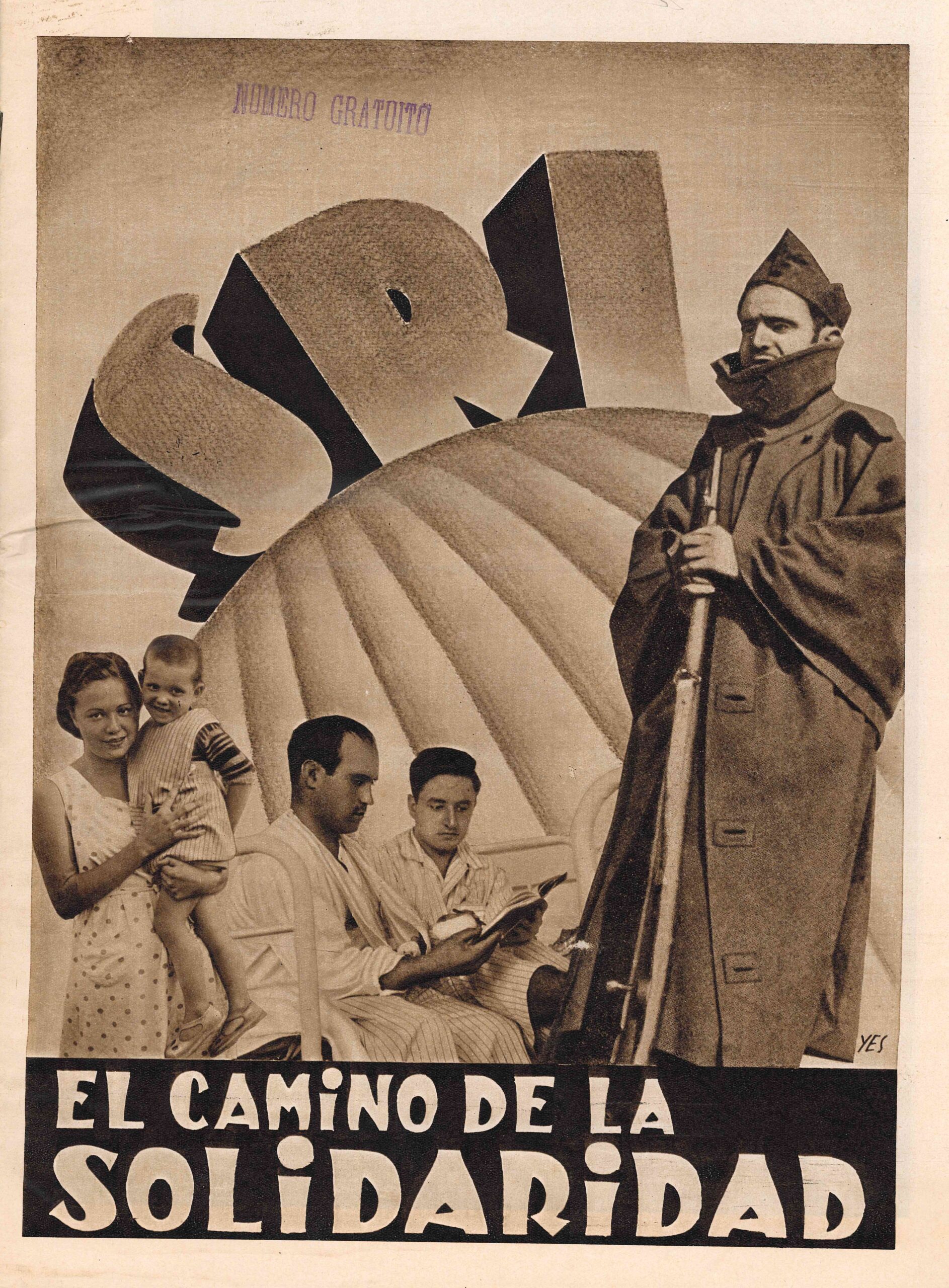 SRI: El Camino de la Solidaridad. Unpaginated [40 pp.] magazine published during the Spanish Civil War by the Socorro Rojo Internacional (SRI, or International Red Aid), profusely illustrated. Small tabloid (14 1/2 x 10 5/8 inches). Original photomontage illustrated saddle-stitched wrappers. “Numero Gratuito” rubber-stamped to top of front cover, some light edgewear and minor chipping, crease along horizontal fold, light dust-staining to margins, overall very good. Madrid: Editorial Estampa, 1937. (53505) $1,500
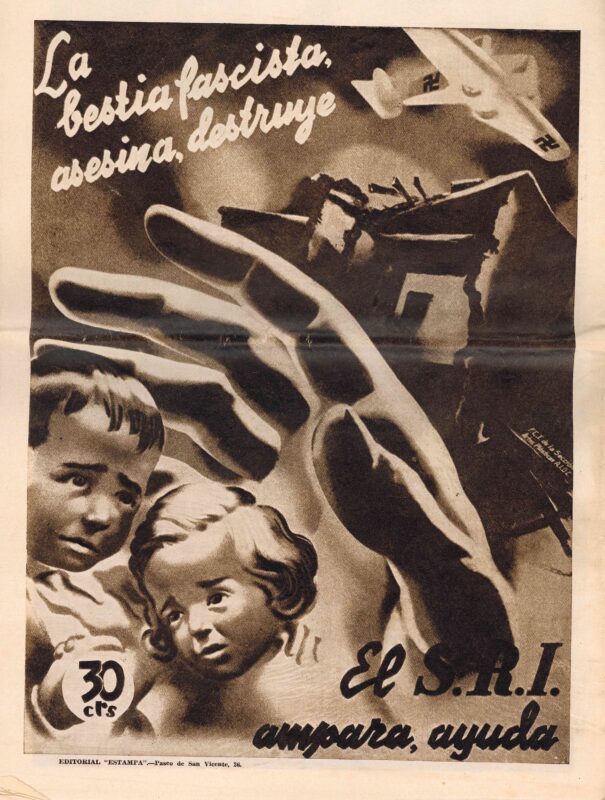 This scarce Spanish-language magazine was a one-off publication, issued just six months after the start of the Spanish Civil War. It was published on behalf of the SRI (Socorro Rojo Internacional, or International Red Aid), a Spanish-Soviet organization formed by the Comintern, or Communist International, in 1922. The SRI was created to function as a sort of international Red Cross, independent of any religious organization, and in Spain was mostly involved in aid activities in the Republican zone, such as creating and running refugee camps, soup kitchens, libraries for soldiers, mobilization of dentists to the front, organization of charity drives for food and clothing, transportation networks between hospitals and the front, and the repurposing of various buildings into field hospitals, blood banks, and makeshift schools. Many of their activities had children as a central focus. (The Visual Front: Posters of the Spanish Civil War from UCSD’s Southworth Collection, 1998)
This publication highlights the SRI’s involvement in relief efforts. There are photo essays regarding sanitation work, the establishment of blood banks in Madrid and the provinces, dentistry work, the establishment of schools and children’s homes, refugees, and even reproductions of propaganda. There are many images which show the human cost of war, especially women and children affected by the fighting. The front cover features a photomontage designed by Spanish artist and graphic designer Ricardo Yesares Blanco, who signed his works “YES”. Scarce institutionally; as of June 2025, OCLC locates only two physical holdings at North American institutions.
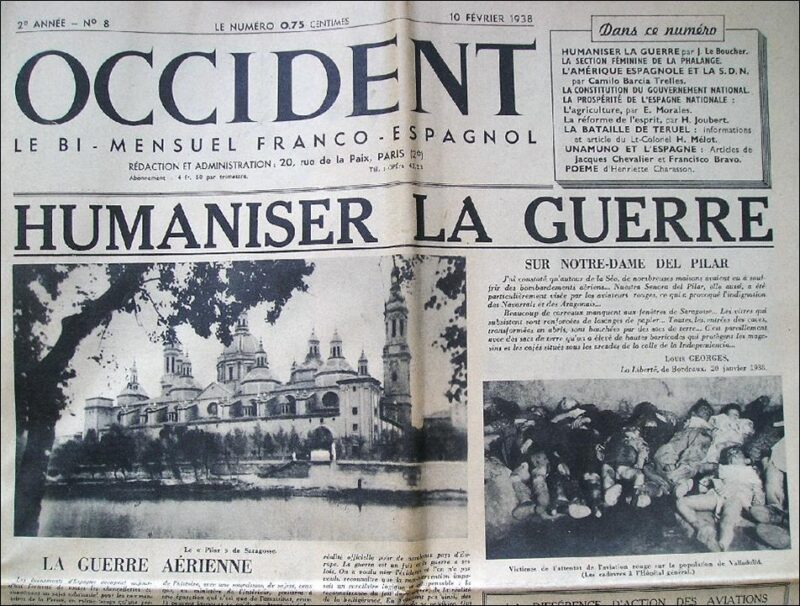 Additionally, we have in our inventory two important publications from abroad, covering the war in great detail. The first of these was published in Paris for much of the duration of the war. Occident: Le Bi-Mensuel Franco-Espagnol. Year I, no. 1 (25 October 1937) through Year II, no. 39 (30 May 1939) (all published). Paris: Imprimerie Georges Lang, 1937-1939. Folio (58.5 x 38.5 cm). 1/2 leather with marbled boards, original illustrated newsprint self-wrappers bound in; each issue approximately 8 pp. Evidence of previous folds, some light abrasions and edgewear to boards, minor splitting to leather along spine, very minor toning, overall very good. (50048) $8,500
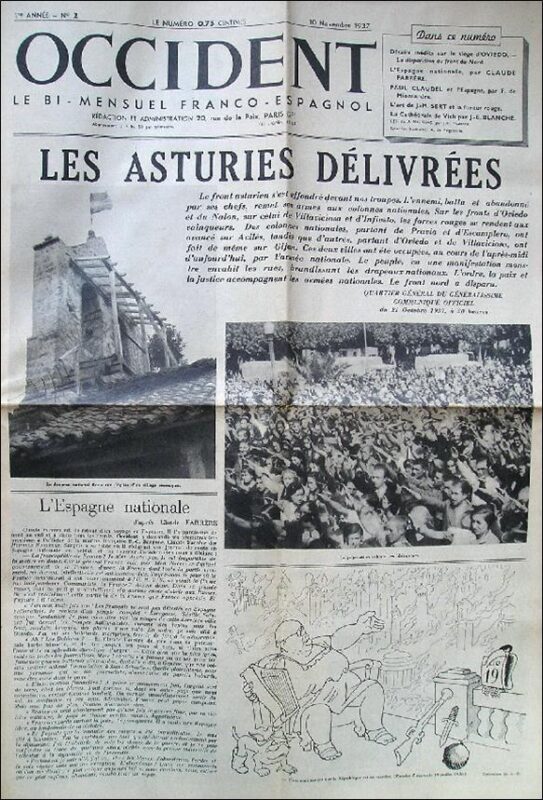
A complete run of all 39 issues of the Paris-based periodical, in tabloid format, dedicated to the solidarity of the French and Spanish people during the Spanish Civil War. This cultural journal contains articles by noted international cultural figures on various aspects of the war, Spanish culture, French interests in Spain, and other subjects, and is profusely illustrated throughout after photographs, caricatures, political cartoons, reproductions of posters, etc.
The fourth issue contains the “Manifest aux intellectuels espagnols”, a manifesto in support of General Franco and Franco’s Spanish intellectuals, signed by intellectuals from various right-wing factions. The scarce serial presents a compendium of in-depth articles and political analysis, but is perhaps most impressive for its rich trove of visually arresting images, with many photographs showing the destruction wrought during the war.
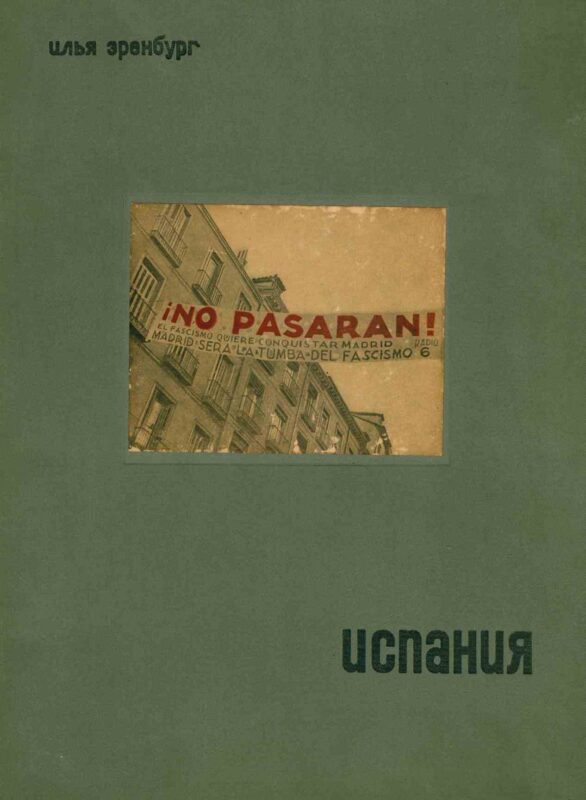 The second is a two-volume set issued by a prominent Soviet writer, journalist, and revolutionary. Ehrenburg, Ilya. (Erenburg, Il’ia.). Ispaniia. 2 volumes (102, 151 pp.), subtitled “UHP – Do 18 Iiulia 1936 Goda” (Until July 18, 1936) and “No Pasaran! – Grazhdanskaia Voina, Iiul’-Dekabr'” (The Civil War, July-December), profusely illustrated throughout. Large quarto (12 1/8 x 8 7/8 inches). Original embossed cloth, volume 2 with mounted title illustration. Some light rubbing and minor soiling to clovers, cover illustration to volume 2 slightly browned and rubbed, light toning and foxing throughout, a few spots of minor marginal damp-staining, first volume with handwritten inscription to front flyleaf, overall very good. Moscow and Leningrad: IZOGIZ/State Publishing House for Fine Arts, 1937. (53443) $8,500
Ilya Ehrenburg (1891-1967) was a prolific Soviet writer, journalist, translator, revolutionary, and prominent member of the Jewish Anti-Fascist Committee, who became first known for his reporting during WWI, WWII, and the Spanish Civil War. During the Spanish Civil War, he became directly involved in the military activities of the Republican camp and often accompanied the Republican army as a reporter for the newspaper Izvestiya. He was also frequently allowed by Stalin to visit Europe to help campaign for peace and socialism.
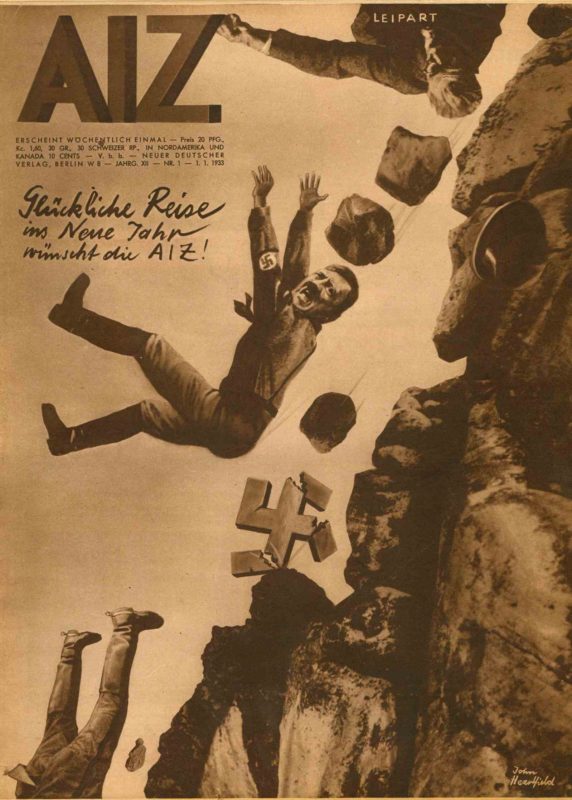
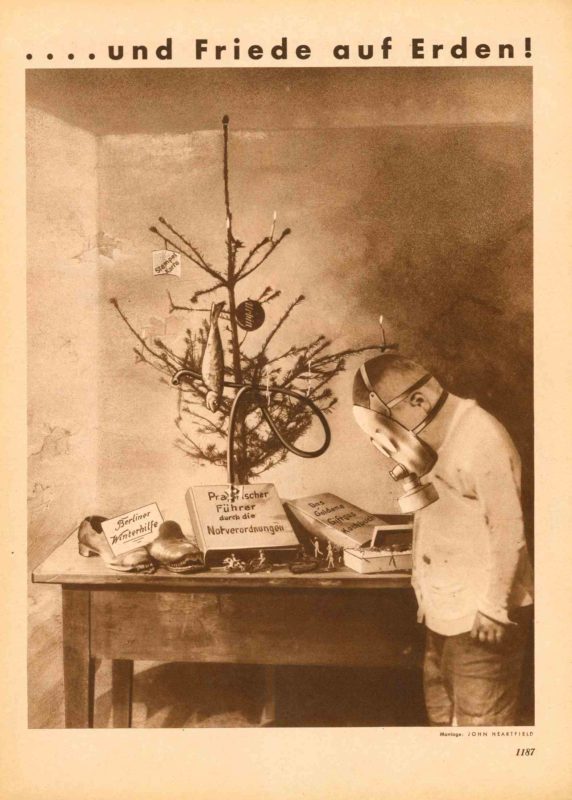
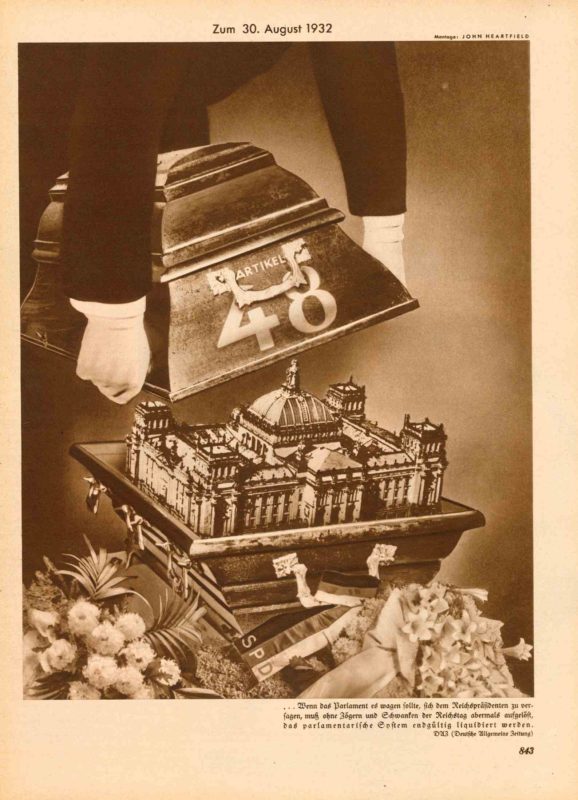
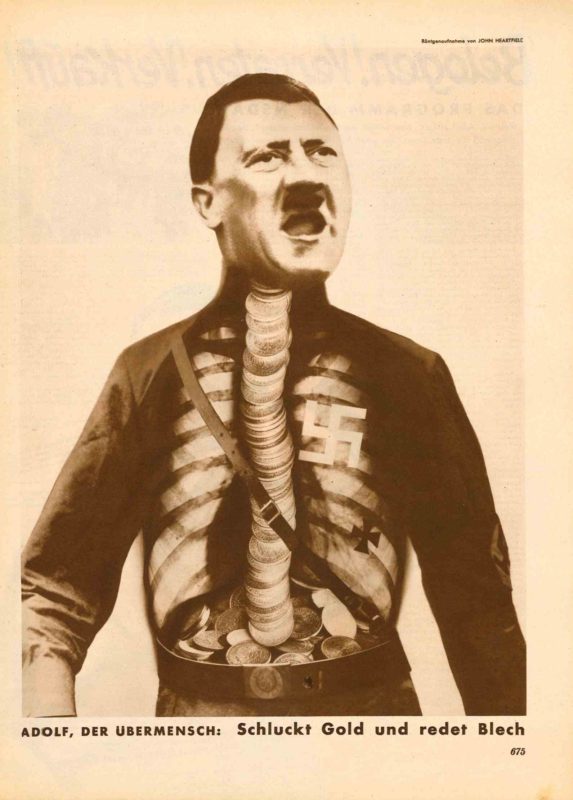
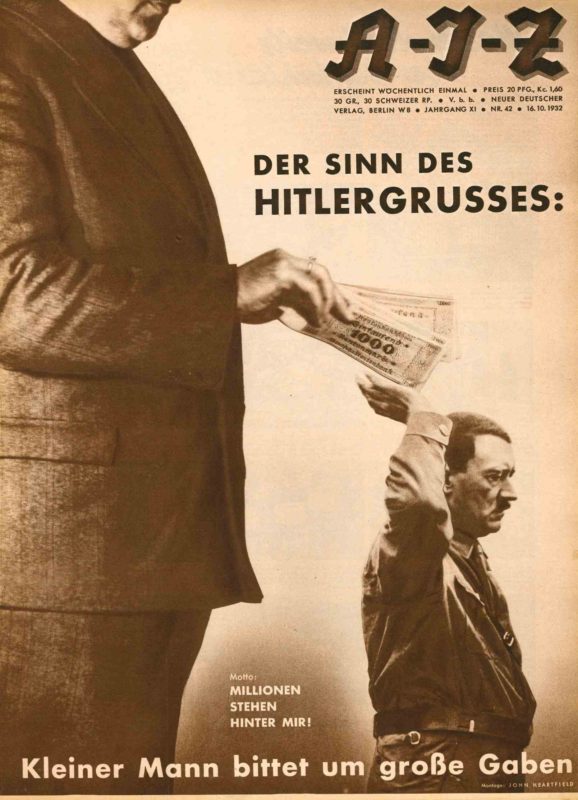
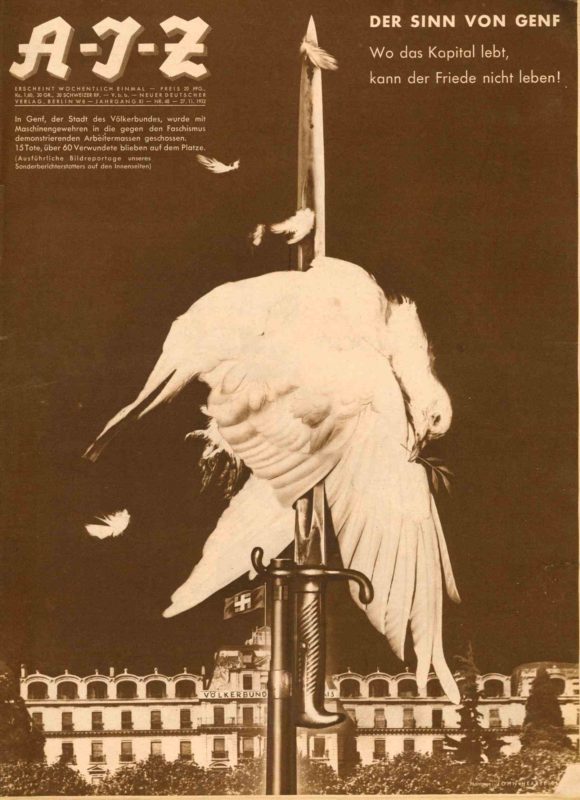
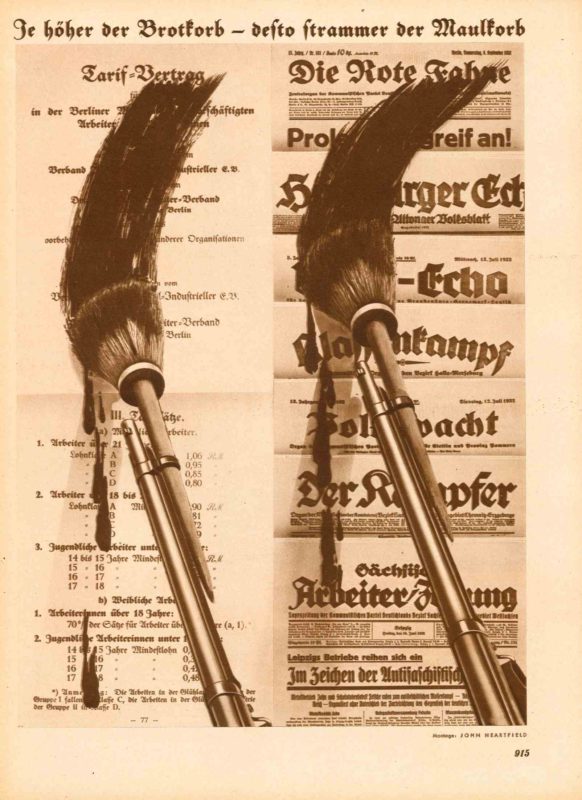
These two volumes together comprise a pictorial history of the Spanish Civil War, devoted to the Spanish people’s struggle for independence. Each volume contains numerous black-and-white journalistic photographs and illustrations depicting daily village life, families, soldiers, meetings and gatherings, propaganda, war damage, with some graphic images of the dead and wounded. Each of the images is captioned in Cyrillic, many with paragraphs of descriptive text. There are several photographs by noted photographers such as Eli Lotar, Robert Capa, Oples, Reisner, and Chim (David Seymour). Alongside the photographs, the second volume also contains a John Hartfield photomontage and reproductions of numerous political posters. The covers of Volume 1 were designed by Eugene Golyahovsky, and Volume 2 was designed by El Lissitzky and Sophie Lissitzky-Küppers. Scarce institutionally.
{ 1 comment }