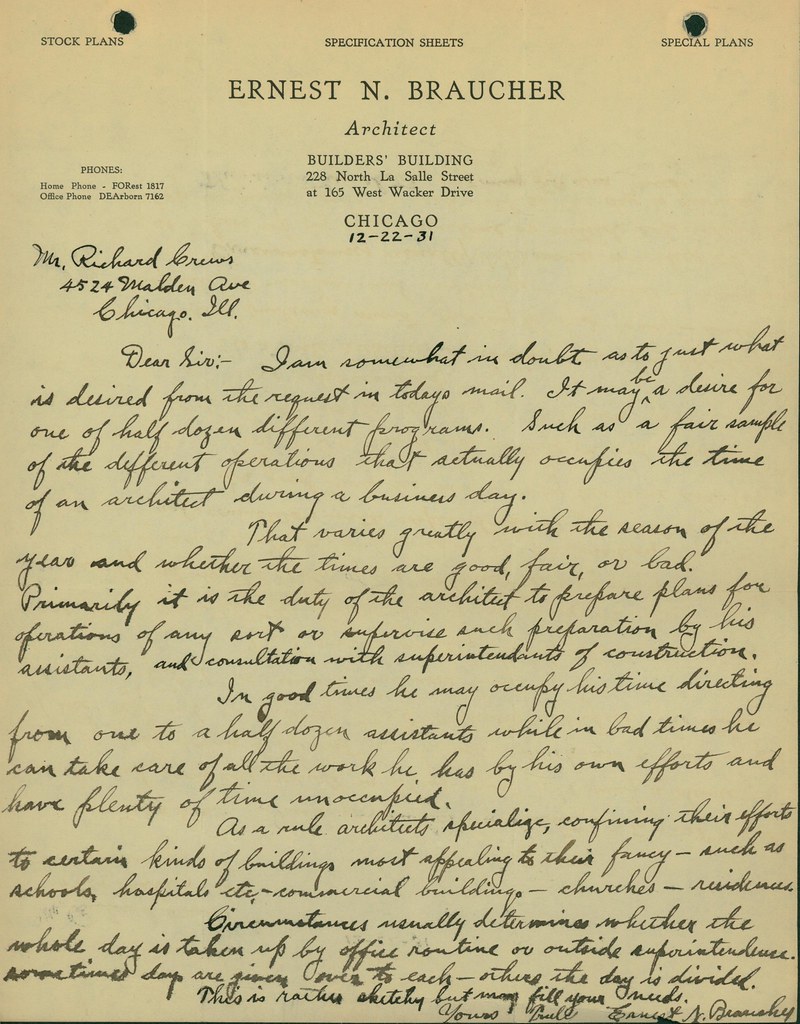
Letter from Ernest N. Braucher
On December 21, 1931, a young man named Richard Crews sent letters to the offices of several prominent Chicago architects inquiring about the demands of daily life in the profession. He received well-considered, carefully written, and quite informative responses from at least four members of the trade: Howard White, a founding member of one of Chicago’s most renowned firms, Graham, Anderson, Probst & White (successors to D. H. Burnham & Co.); Chas Morgan, an active associate of Frank Lloyd Wright (who, indeed, signed his letter “Charles Morgan, Chicago Associate of Frank Lloyd Wright”) and draftsman for Wright’s unrealized but ambitious National Life Insurance Building; Ernest Braucher, who designed scores of Craftsman-style residences in Chicago, several of which are currently marked for historic preservation; and Clarence Doll. [click to continue…]
{ 0 comments }
