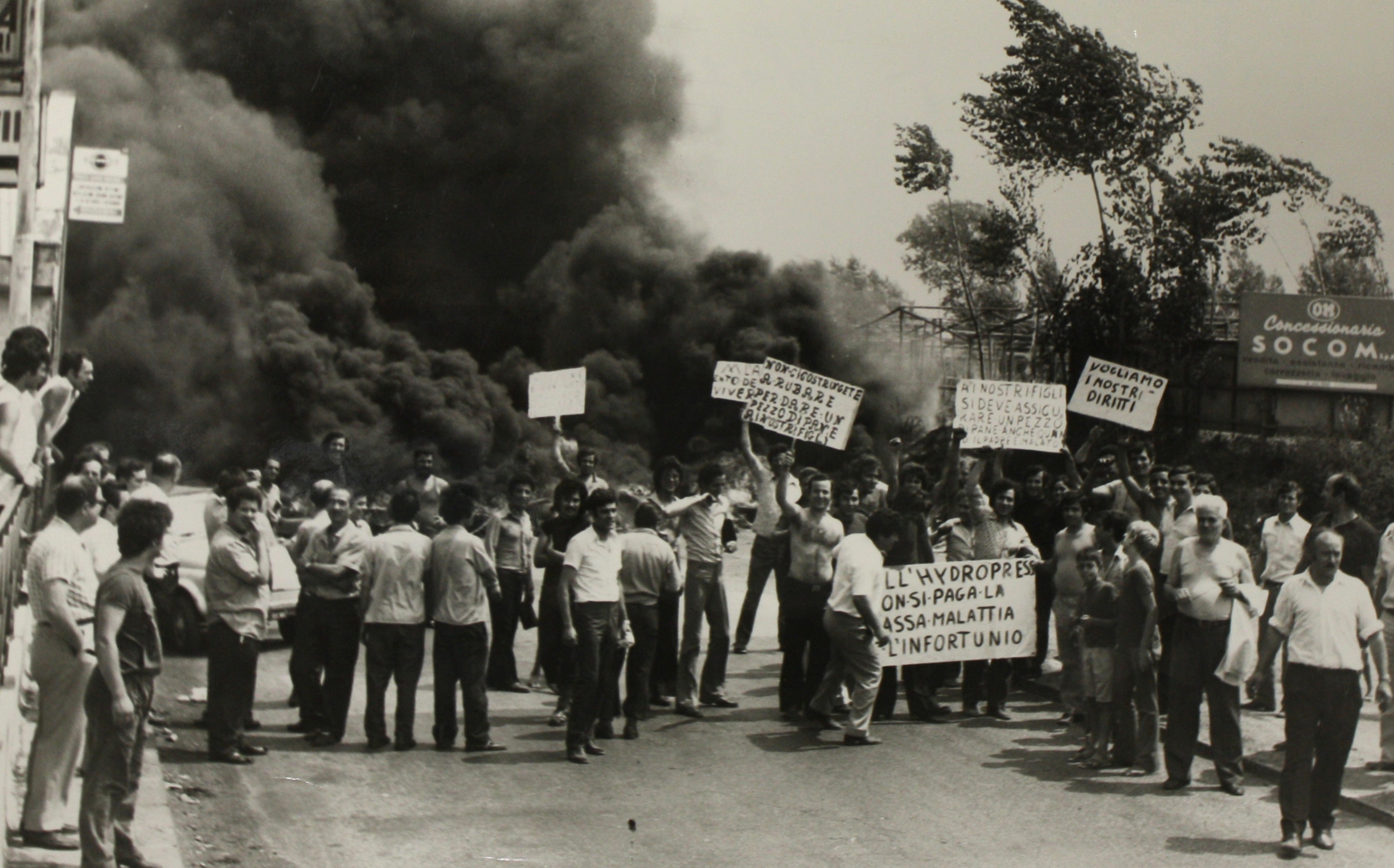
Naples, September 1974.
“Anni di piombo” (“The Lead Years”) has little nostalgic resonance in the US. Unlike “Mai ‘68”, which instantly evokes exhilarating scenes of French student occupations, demonstrations, police brutality, wildcat strikes, riots, and barricades. (And perhaps some fervent threesomes if you made it through Bertolucci’s The Dreamers.) While Mai ‘68 appears retrospectively as both the unfulfilled apex and mythic nativity for so many –isms of the late twentieth-century, the tumultuous anni di pombo are largely overlooked despite the radical political and cultural activity maintained by the Italians for a decade after similar movements had withered in France and the United States. [click to continue…]
Tagged as:
1970s,
anni di piombo,
Autonomia,
autonomist,
Brigate Rosse,
Controinformazione,
Italy,
Lead Years,
photojournalism,
Potere Operaio,
Rivoluzione Comunista,
workerism
52 Examples of Jewish-American Sheet Music from the Early 20th Century. A collection of English-language sheet music, ca. 4-8 pp. each, in orig. color illus. wrrps., most published in New York, Boston, Chicago, Cleveland, or Los Angeles, ca. 1900-1920. (47699)

“Under the Matzo Tree: A Ghetto Love Song,” “Yiddle on your Fiddle Play Some Rag Time,” and “At Abe Kabbible’s Kabaret,” aren’t the songs that made legends of Jewish-American composers and lyricists like Irving Berlin, George Gershwin and Jerome Kern. Their celebrated contributions to the history of American popular music and modern styles of ragtime, jazz and blues for vaudeville, musical theater, radio, and eventually film have eclipsed their modest beginnings as song-pluggers and composers churning out campy sheet music titles like these for parlor room entertainments and novelty acts in New York City’s raffish Tin Pan Alley. [click to continue…]
Tagged as:
Graphic design,
Illustration,
Jewish composers,
Leo Feist,
music,
ragtime,
sheet music,
Starmer,
Tin Pan Alley,
Witmark
by Erika Knowles on March 11, 2014
in 20th-Century,Art,Design,Film,Graphic Design,Photography,Poetry,Politics,Russia,Typography
Novyi Lef. Zhurnal Levogo Fronta Iskusstv. Year 1, No. 1 (January 1927) through Year 2, No. 12 (December 1928) (all published). 24 issues, published in 22 vols. as issued, comprising a complete first edition of the Soviet avant-garde monthly designed by Alexandr Rodchenko under the editorial direction of Vladimir Mayakovsky, followed by Sergei Tret’iakov, each issue with 4 pp. of reproductions of photographs or photomontages by Rodchenko and others bound in. 4to. Orig. illus. color wrpps. by Rodchenko. Moscow (Gosizdat) 1927-1928. (47801)
“We must revolutionize people by making them see from all vantage points and in all lights.” [1. Alexandr Rodchenko. Novyi Lef, No. 6 (June 1927), trans. by Gail Harrison Roman.]

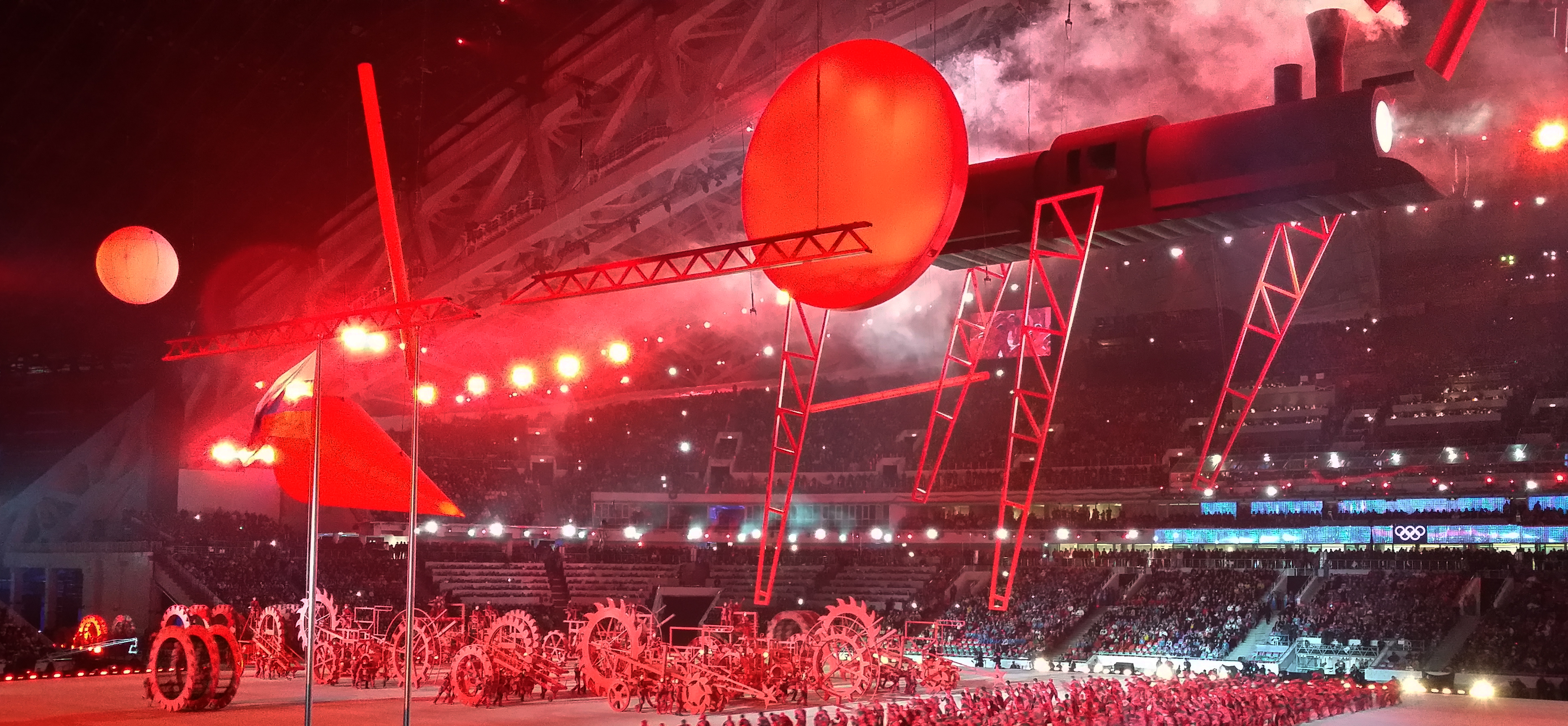
The nationalist pageantry of the Sochi opening ceremony drew vivid attention to Constructivism and the legendary achievements of the Russian avant-garde. A monumental locomotive steaming through the darkened stadium surrounded by dramatically lighted industrial and geometric fragments was an improbable homage to the groundbreaking aesthetic strategies of artists like Alexandr Rodchenko whose photomontages, bold graphic design, and splintered vision celebrated technology and foreshadowed the artist as an “avatar of the information age.”
[click to continue…]
Tagged as:
Constructivism,
Futurism,
Graphic design,
Lef,
Mayakovsky,
Novyi Lef,
photomontage,
realism,
Rodchenko,
serials,
Soviet