Hamburg-Amerikanische Packetfahrt-Actien-Gesellschaft. Literarisches Bureau. Turbinen-Schnelldampfer Imperator: Hamburg-Amerika Linie. Hamburg (Kunstanstalt H. G. Rahtgens for Hamburg-Amerika Linie) 1913. [45805]
Hamburg-Amerikanische Packetfahrt-Actien-Gesellschaft. Literarisches Bureau. Imperator auf See, 1913. Berlin (Otto Elsner/ W. H. Deffke for Hamburg-Amerika Linie) n.d. (1913). [42926]
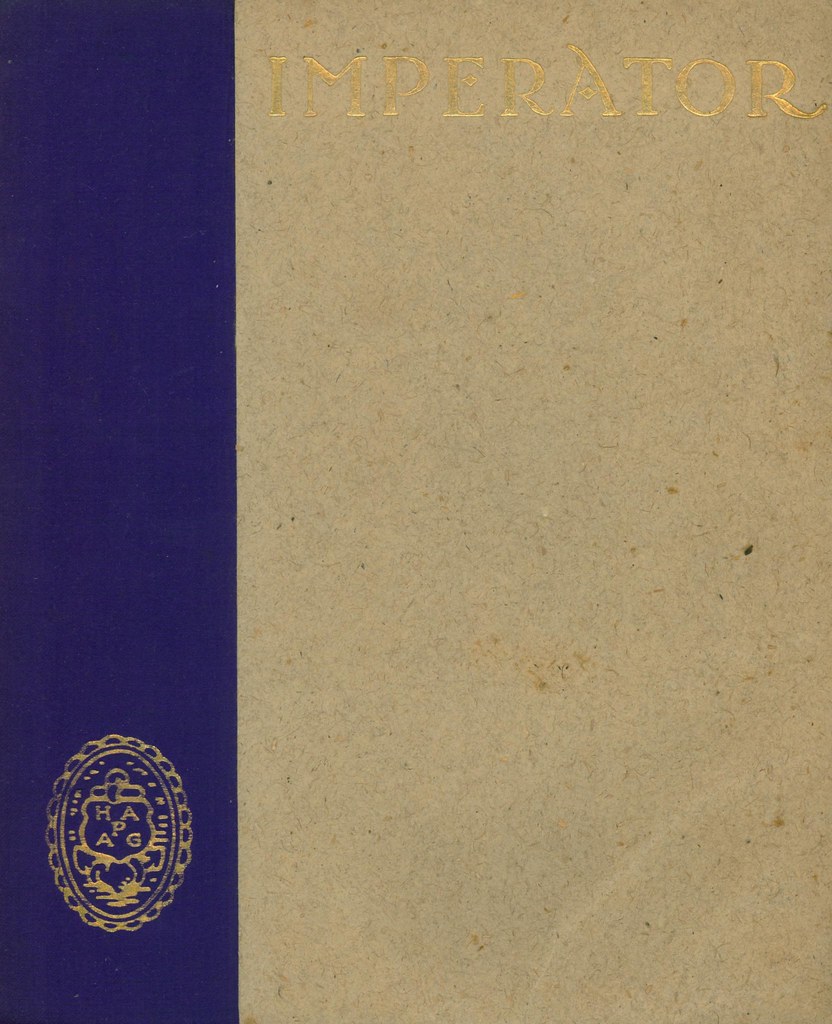
Turbinen-Schnelldampfer Imperator: Hamburg-Amerika Linie (boards cover).
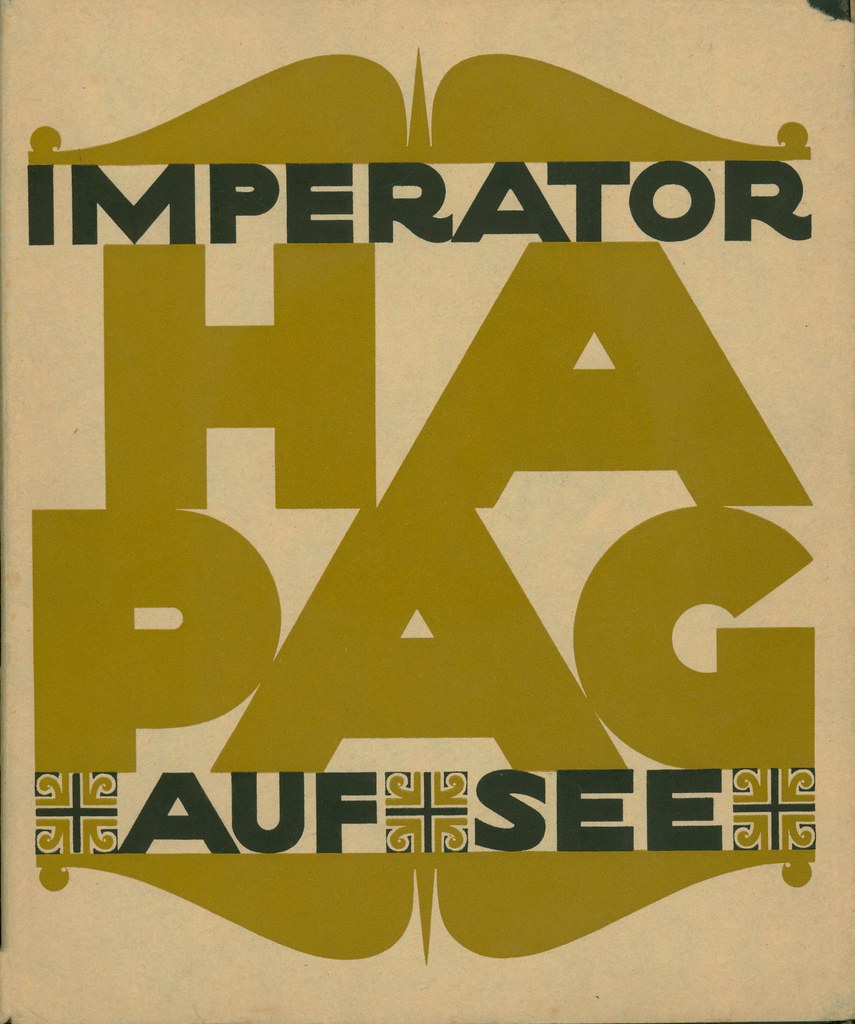
Imperator auf See, 1913 (dust jacket).
These two lavishly produced promotional booklets offer a seductive glimpse into the luxurious world of early twentieth-century transatlantic crossings. They also stand as remarkable examples of German graphic art, typography, and publication design of the same era.
Commissioned to showcase the Hamburg-Amerikanische Packetfahrt-Actien-Gesellschaft’s (HAPAG) flagship oceanliner, Turbinen-Schnelldampfer Imperator (“Turbine-Steamship Imperator”) and its follow-up, Imperator auf See (“Imperator at Sea”), reflect the high-stakes competition between the German shipping magnates and their competitors abroad. In order to attract well-heeled travelers, HAPAG spared no expense in production of its passenger vessels. Likewise in the promotional materials they printed to advertise them.

2-page spread from Turbinen-Schnelldampfer Imperator.
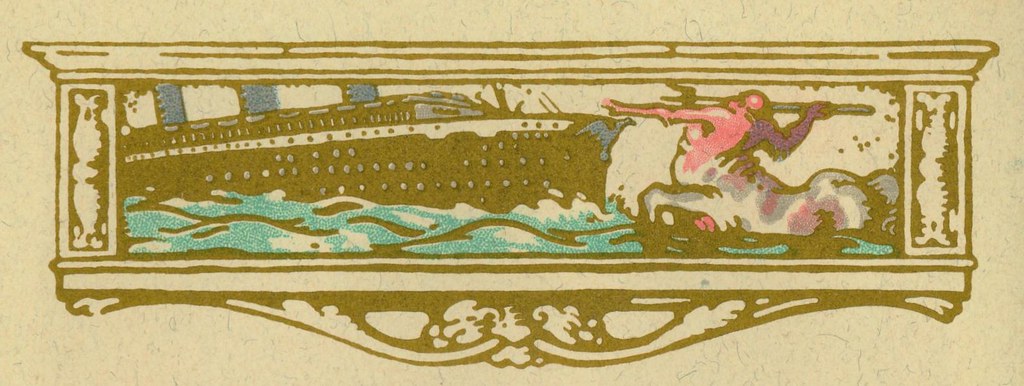
Turbinen-Schnelldampfer Imperator, detail: Woodcut illustration by Julius Gipkins.
Both brochures were likely produced with the oversight of legendary art director Carl Ernst Hinkefuss, who at the time of their publication worked as a freelancer for the German advertising trade. Turbinen-Schnelldampfer Imperator, officially credited to the fine printing firm H. G. Rahtgens and noted illustrator Julius Gipkins, displays Hinkefuss’ characteristic marriage of noteworthy fonts and graphics that bridge the divide between early Art Deco and later modernism. [Eds. note: The copy in our inventory also bears his book plates on the front and rear cover pastedowns.] Imperator auf See is credited to the Otto Elsner firm, which employed Hinkefuss and his close collaborator Wilhelm Deffke from 1913 to 1914. The two would soon go on to establish their own agency, Wilhelmwerk.

2-page spread, Turbinen-Schnelldampfer Imperator.

End papers (with Hinkefuss bookplate) for Turbinen-Schnelldampfer Imperator.
Deffke, Hinkefuss, and their peers were at the very forefront of corporate branding, graphic design, and lifestyle advertising. Their approachable avant-garde sensibilities established the perfect frame for presenting the Imperator as ultramodern yet comfortably luxurious. Wilhelmwerk went on to produce logos, page layouts, printed books, and brand identity kits of the utmost sophistication. (Perhaps inadvertently, among them the swastika. Read a fascinating article on the topic here.)
Illustrated Boards cover, Imperator auf See, 1913.

Illustration for Imperator auf See, 1913, by Wilhelm Deffke.
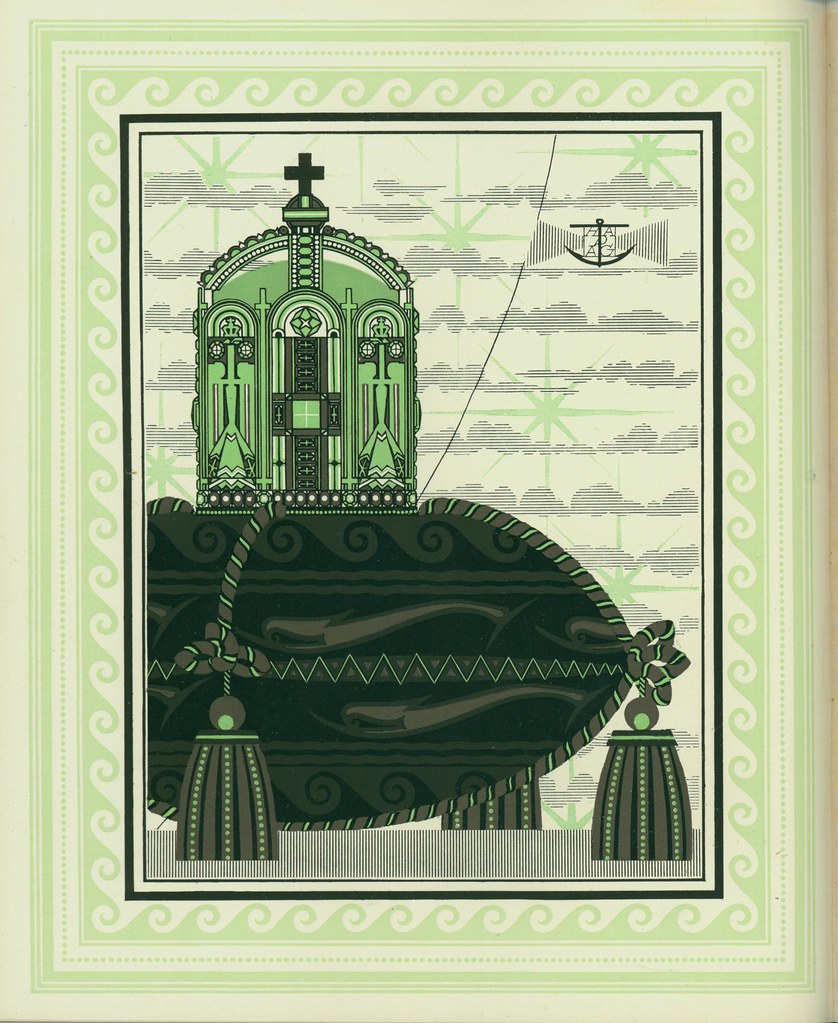
Illustration for Imperator auf See, 1913, by Wilhelm Deffke.
The era of the superliners was short lived. Only one year prior to the Imperator’s maiden voyage, its dowdier yet better known cousin, the Titanic, had sunk in the icy waters of the North Atlantic. Shortly after the Imperator completed her first round trip passage between Hamburg and New York, the First World War erupted all but halting transatlantic sea travel. By the mid-1930s, those hoping to make the crossing had the option of air travel, which completed the journey in a fraction of the time. In the meantime, impounded by Allied forces after the war, the Imperator was pressed into service as a military transport vessel, first by the Americans, later by the British.

2-page spread from Imperator auf See, 1913.
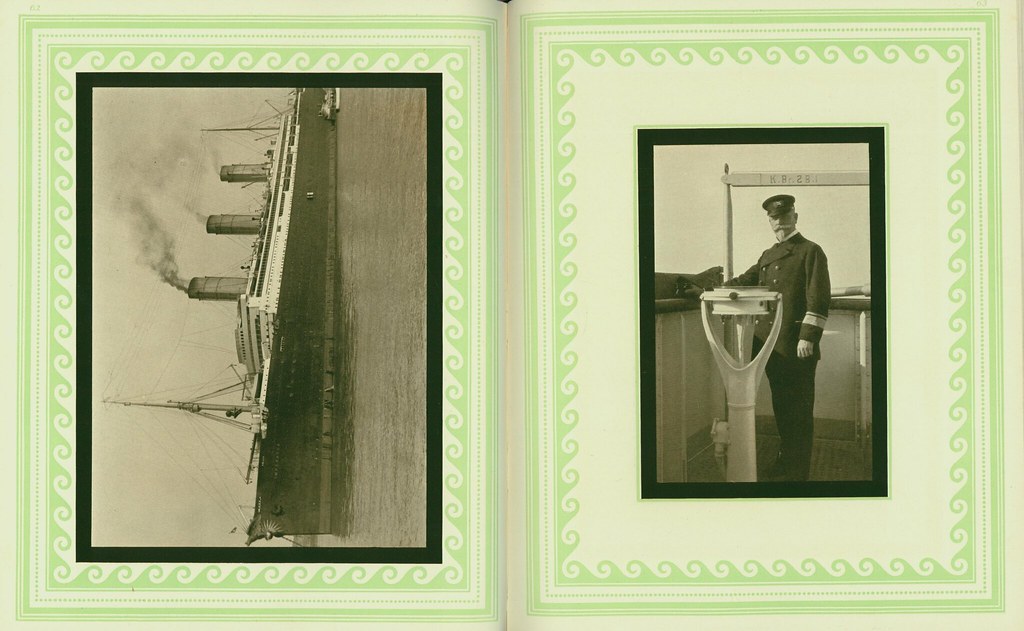
2-page spread, Imperator auf See, 1913.
But as Deffke and Hinkefuss’ brochures testify, however brief, the era of the great ships was a moment of otherworldly elegance — almost outside of time — in stark contrast to the chaos that followed.

{ 2 comments… read them below or add one }
Sehr geehrter Herr Thannhuber!
Sind Sie noch im Besitz des Exemplares? Ich habe Interesse daran.
Mit freundlichen Grüßen
Andrea Zander
Ich besitze ein Originales Exemplar und würde es eventuell verkaufen!